Establishing Problem-Market Fit & Repeatable Traction
Move from founder-led learning to a focused, repeatable path to the right customers—before scaling headcount or spend. GTM OS helps early-stage founders validate the problem, narrow the ICP, prove one revenue motion, and build evidence that can compound.
“At the early stage, clarity and focus are your greatest allies. The goal is not to look like a mature company too early. It is to build enough evidence to reach Product-Market Fit with confidence.”
 Use Cases Hub
Clarity Before Scale: Navigating Valley of Death 1
At the early stage, the commercial job is simple but unforgiving: prove that a real market segment has an urgent problem, values the solution, and can be reached through a repeatable motion.
Growth breaks when founders mistake early curiosity for repeatability and start scaling before the evidence is strong enough.
Founder-Led Selling Does Not Scale
Early wins often depend on founder credibility, relationships, and custom selling. That is useful for learning—but it does not yet prove a repeatable commercial model.
Scaling Begins Before Problem-Market Fit Is Proven
The company adds sales capacity, marketing spend, or tools before confirming that the problem is urgent, valuable, and repeatable across a defined group of buyers.
Vanity Traction Creates False Confidence
Early enthusiasm and polite interest can look like demand. The real test is whether buyers consistently prioritize the problem, pay for the solution, and realize enough value to stay.
The ICP Is Still Too Broad
Trying to serve too many customer types dilutes product learning, messaging, and sales execution. Without a narrow initial ICP, early signal becomes noise.
Customer Pain Is Not Yet Verifiable
The team builds features and expands the solution without enough evidence that a specific customer problem is urgent, expensive, and worth solving now.
The question at the early stage is not how many customers you can attract. It is whether you can repeatedly solve a critical problem for a specific customer profile that stays and values the outcome.
How GTM OS™ Is Applied at the Early Stage
Validate Problem-Market Fit and Valley of Death 1
Validate Problem-Market Fit through structured customer discovery and repeated testing of the core problem hypothesis. The goal is to prove that the company is solving an urgent problem for a clearly defined group of buyers before scaling product or GTM investment.
Are we solving a critical, high-priority problem for a clearly defined group of buyers?
Calibrate Total Relevant Market and Focus the ICP
Move beyond a broad TAM narrative and identify the customers the company can realistically reach, serve, and win now.
The objective is not to define the largest market. It is to identify the narrow set of customers most likely to value the problem enough to buy, stay, and create useful learning.
Who are our best-fit early customers, and what evidence shows that they have real urgency?
Choose One Offer and Prove One Revenue Motion
Choose one lead offer and one primary GTM motion to prove first. Avoid spreading early resources across multiple products, customer segments, and acquisition channels before one path is working.
The goal is not to run multiple motions. It is to prove that one primary motion converts predictably without custom founder intervention.
Run a 90-Day Proof Cycle
Translate the chosen ICP, offer, and revenue motion into a focused 90-day operating plan. Track only the signals needed to determine whether the model is becoming repeatable before adding headcount, spend, or additional motions.
The goal is not scale yet. The goal is evidence.
Do we have enough evidence to invest more—or do we need to change the hypothesis before we scale?
What Changes When the Early GTM Model Becomes Clear
A Clearer Problem-Market Fit Signal
Leadership has stronger evidence that a specific customer group has an urgent problem, values the solution, and will pay to solve it.
A Focused ICP and Market
The company knows which early customers deserve attention—and which customer types should be deliberately deprioritized.
One Offer and One Motion to Prove
Product, Sales, and Marketing align around the commercial path the company is testing first instead of spreading resources across competing bets.
A More Repeatable Sales Process
Founder knowledge begins turning into a structured discovery, qualification, and sales motion that others can eventually execute.
Evidence for the Next Investment
The leadership team and investors gain clearer signals about whether to invest more, change the hypothesis, or hold back before adding headcount and spend.
Key Focus
Problem-Market Fit & Repeatable Traction
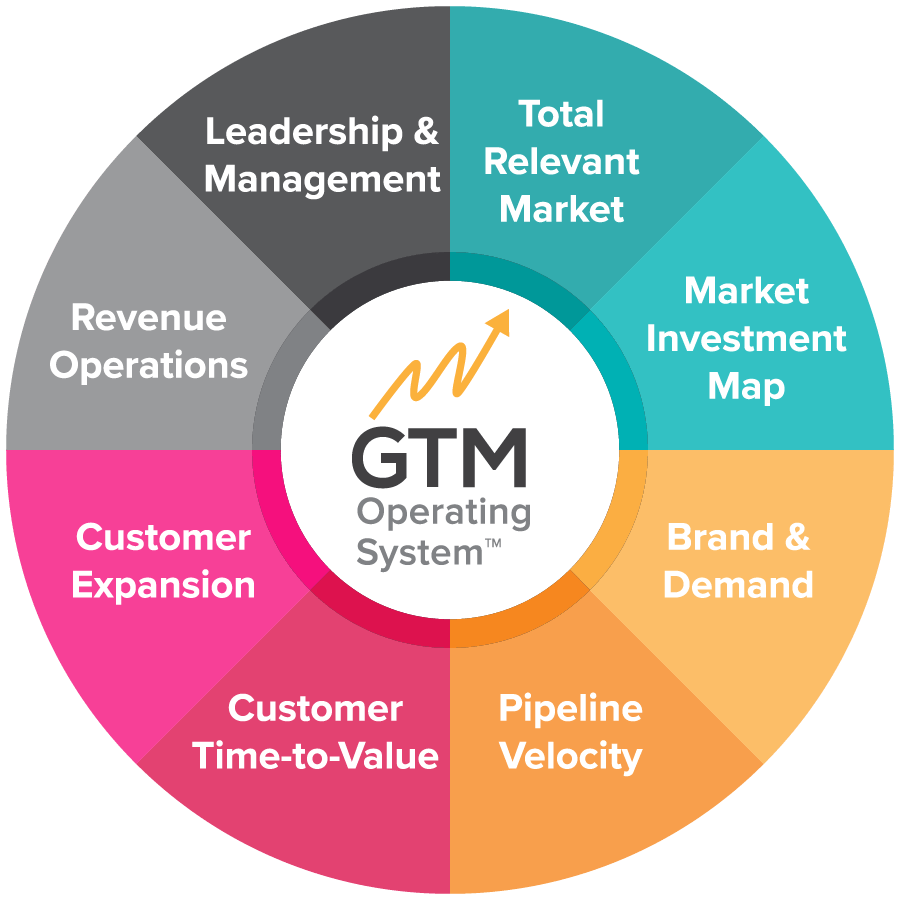
How early-stage founders and venture investors use GTM OS to calibrate ICP focus and reach sustainable repeatability.
"As a startup founder, I was wearing every GTM hat—CRO, CMO, CS lead—and our growth was suffering from a lack of focus. The GTM OS gave us the foundational clarity and repeatable frameworks we needed to get unstuck and align for multi-6-figure expansion. It's the operating system for predictable, efficient growth."
"Before going through the Market Investment Map work, we had a lot of possible avenues we could pursue. The exercise forces prioritization. It's not about everything we could do — it's about identifying the next best leverage point for growth."
Build a Repeatable GTM Engine Before You Scale
A Certified GTM OS Partner can help your founding team validate Problem-Market Fit, define a razor-sharp ICP, and establish the initial repeatable revenue motion needed to scale with confidence.