The Comprehensive Guide to Go-to-Market (GTM)
By Sangram Vajre, Bryan Brown, and Lindsay Cordell • GTM Partners
When the founders of GTM Partners analyzed hundreds of high-growth B2B companies alongside data partnerships with G2 and Bombora, the conclusion was inescapable: Go-to-Market is broken. This guide outlines why GTM breaks, establishes the new canonical definition, and breaks down the frameworks to build a predictable, repeatable revenue engine.
The Source of GTM Complexity
The last 20 years have seen monumental shifts in how B2B buyers purchase and how companies market, sell, and deliver value. We can summarize this revolution into the digitization of everything—learning, evaluating, purchasing, marketing, servicing, events, and communication.
Buyers have taken center stage. If a buyer does not like the way you interact with them, they go elsewhere. And if an employee cannot connect the work they do to positive business outcomes, they go elsewhere too. In an effort to deliver better experiences to larger buying committees, companies introduced hyper-specialized customer-facing roles.
Typical Number of Handoffs During Customer Acquisition & Delivery
There was a time when GTM was simply "Sales and Marketing." Today, customer perception is shaped across Product, Demand Gen, Brand, SDRs, AEs, Solutions Engineering, RevOps, Customer Success, and Support. Every handoff introduces friction, miscommunication, and revenue loss.
When expansion revenue declines, is it a product issue? A positioning problem? The wrong target audience? Poor sales execution? Or broken post-sale onboarding? Specialization has made it impossible to diagnose revenue stalls without a unified operating system.
What Do You Mean By "Go-to-Market?"
of 1,000+ B2B professionals believe Go-to-Market belongs to Marketing or Sales.
Research conducted by GTM Partners across mid-market and enterprise operators reveals the root of the crisis: companies treat GTM as an org chart department rather than an interconnected company-wide operating process.
“Go-to-Market (GTM) is a transformational process for accelerating your path to market with high-performing revenue teams delivering a connected customer experience.”
Fundamentally, GTM represents the strategies and processes by which you bring a revenue-generating aspect of your business to the right buyers and continue to deliver on their expectations to ensure they remain your customers for as long as is appropriate.
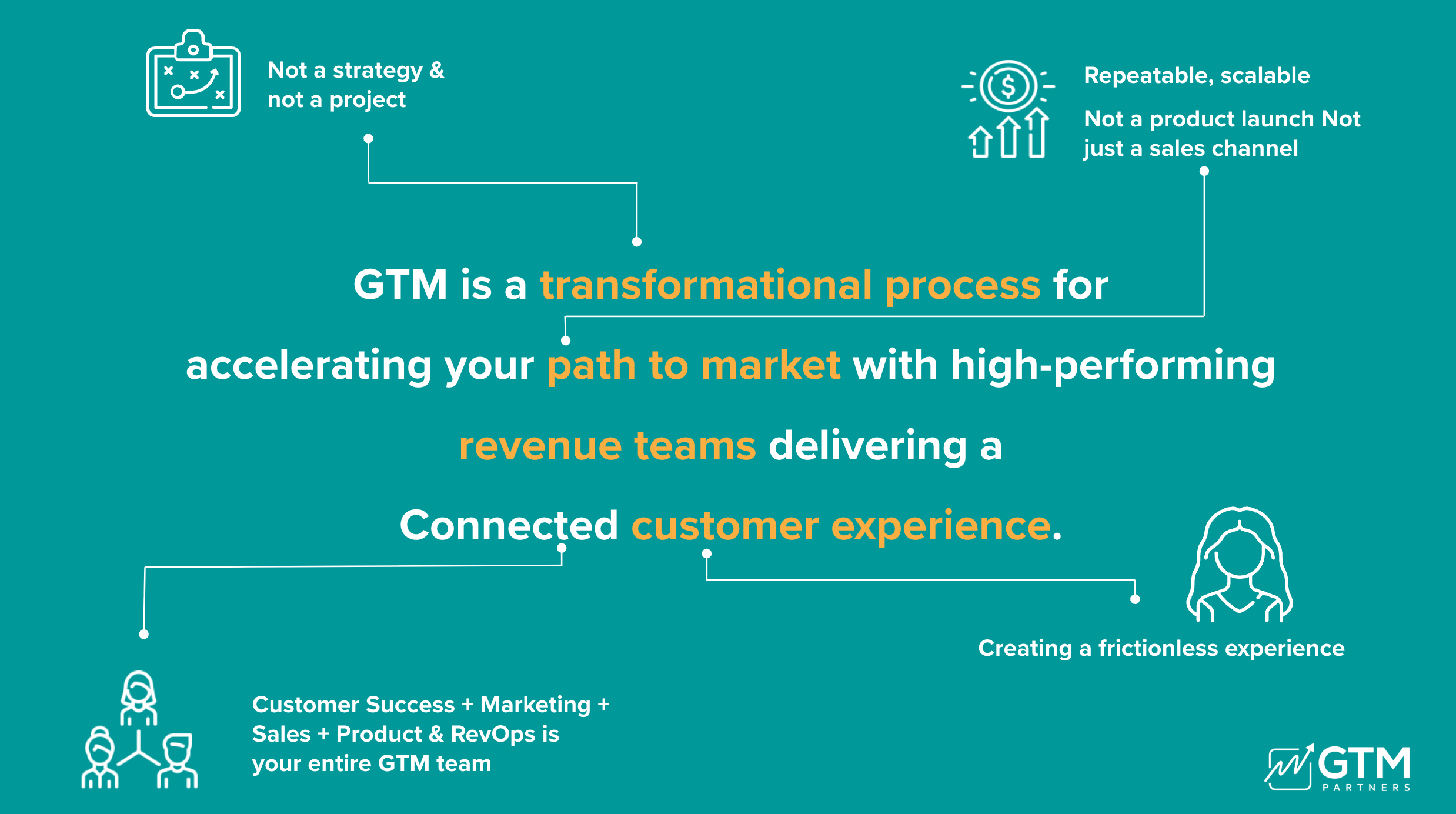
Figure 1: The Go-to-Market Operating System™ Definition Architecture
1. Transformational Process
Not a strategy & not a project. GTM is an ongoing, adaptive operational discipline. It cannot be "solved" at an annual executive offsite and put on a shelf.
2. Accelerating Path to Market
Repeatable, scalable. GTM is not a product launch, nor is it just a sales channel. It is the repeatable engine that continuously brings revenue to your business.
3. High-Performing Revenue Teams
Customer Success + Marketing + Sales + Product & RevOps is your entire GTM team. Eliminates finger-pointing by aligning all 5 departments to shared revenue metrics.
4. Connected Customer Experience
Creating a frictionless experience. Unifying the buyer and customer journey from initial discovery to renewal, expansion, and advocacy without handoff drops.
What Go-to-Market is NOT:
- ❌ A one-and-done event: It cannot be "cracked" at an annual executive offsite.
- ❌ A strategy or a project: It has no expiration date; it is an enduring operating discipline.
- ❌ Just sales or marketing: It is not a product launch, an ad campaign, or a pipeline funnel.
What Go-to-Market IS:
- ✅ An iterative transformation process: Evolves continuously as products, buyers, and stages change.
- ✅ Repeatable & scalable: Answers billion-dollar questions like: When can we scale our business?
- ✅ A unifying company operating system: Connects Strategy, Planning, and Execution across the C-suite.
The 6 Types of Go-to-Market & Multi-Motion Architecture
Most modern organizations run more than one GTM type, and almost all high-growth companies operate multiple GTM motions. A GTM Motion is a grouped set of products, target buyer segments, and channels that must be sold, delivered, and expanded differently than other segments.
Inbound-Led
Marketing harvests demand via paid, organic, social, email to qualify and route high-intent leads to Sales.
Outbound-Led
Marketing & Sales alignment: Account-based marketing, 1:1 advertising, bespoke content hubs, and SDR cadences.
Product-Led (PLG)
The product facilitates signups, trials, usage, and in-app expansion; supported by a sales-assisted PLG motion.
Partner-Led
Activation through channels, technology ecosystems, agency partners, resellers, co-selling, and nearbound relationships.
Event-Led
Targeted educational roadshows, user conferences, executive roundtables, virtual summits, and private VIP dinners.
Community-Led
Thought leadership driven by industry practitioners, peer forums, certified operator ecosystems, and customer champions.
When Do You Need a New GTM Motion? The 2-Question Decision Framework
Whenever leadership contemplates an expansion initiative—adding a new buyer persona, entering a new vertical, launching a new product, or expanding into a new geography—the executive team faces a critical fork in the road:
“Can this be sold and delivered in the same way with existing resources in Marketing, Sales & CS?”
• If YES: Add the initiative to an existing GTM Motion. It shares the same buyer cycle, messaging, and post-sale delivery rhythm.
• If NO: Do not force it onto your current teams. Proceed to Question 02.
“Can you fund and launch a dedicated new GTM Motion?”
• If YES: Launch a dedicated GTM motion with distinct pipeline targets, quota capacity, and enablement.
• If NO: Hold or execute a limited test. Never treat a new motion as a "side project" for existing reps.
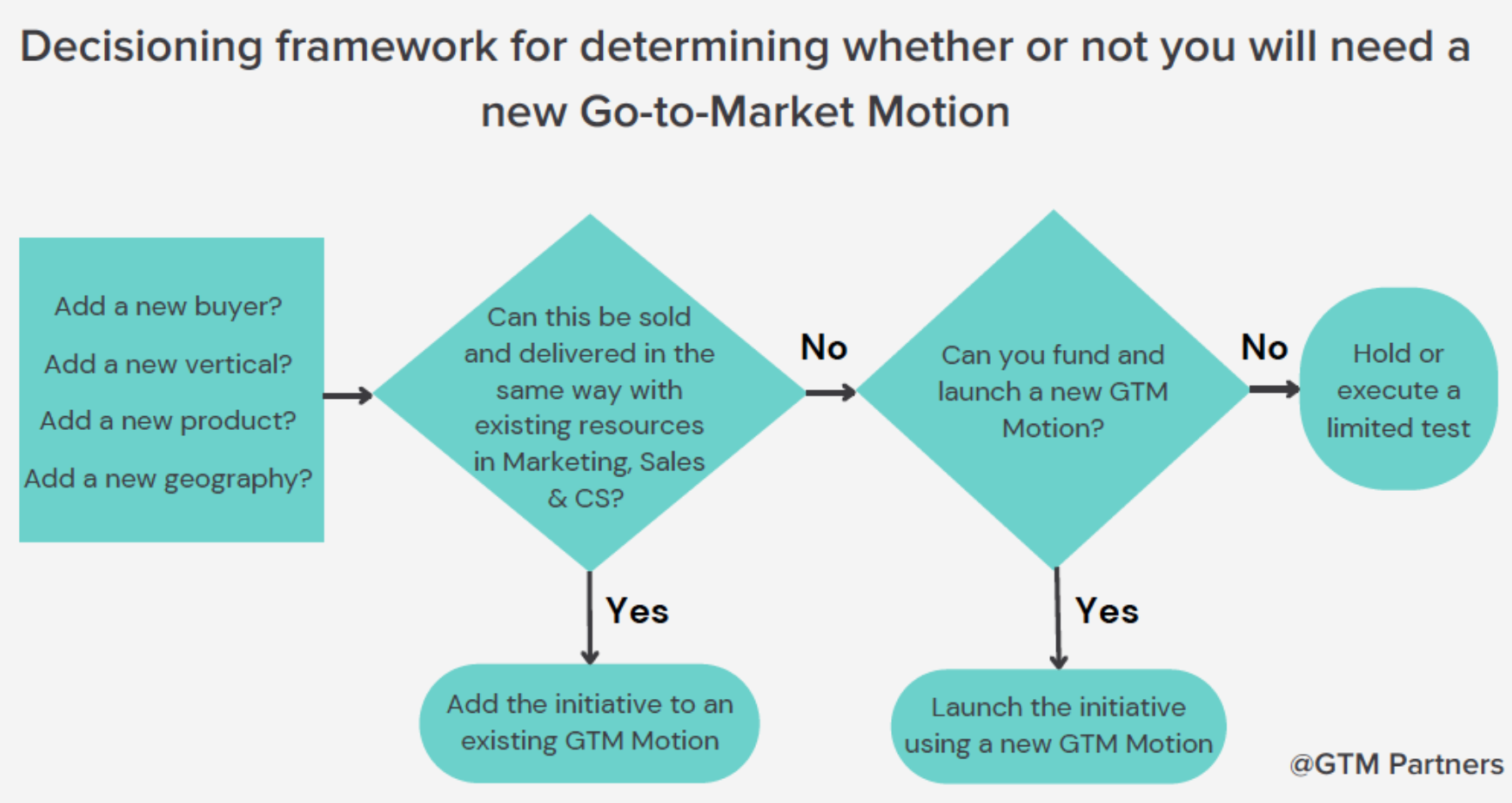
Figure 2: Decision Framework for Determining When to Launch a New GTM Motion
The Optionality Tax: How HubSpot Unlocked $1.3B+ by Choosing One Motion
In its early days, HubSpot was acquiring customers for ~$10K CAC with a lifetime value (LTV) of $25K. Every time they stepped on the gas, unit economics deteriorated because the company was torn between two conflicting personas: "Owner Ollie" (small business owner) and "Marketing Mary" (mid-market marketing leader).
“It turns out the product requirements, pricing, and support were completely different for Ollie and Mary. By not deciding, we made one uninspired compromise after another and never nailed either one. In 2012, we ripped the Band-Aid off and just picked Mary.” — Brian Halligan, Former CEO, HubSpot
| Metric | Before (Splitting Focus) | After (Disciplined Motion) |
|---|---|---|
| Customer Retention | 65% | 82% |
| Revenue Retention | 70% | 100% |
| LTV | $25K | $52K |
| Annual Revenue | $15M | $1.3B+ |
Lesson: You cannot fund two distinct motions without distinct resources. Declare what you will and will NOT do.
The 6 Essential Roles of Go-to-Market
In our poll of 1,000+ GTM professionals, 47% believed the CMO owns GTM, 24% said the CEO, and 20% said the CRO. Meanwhile, Wall Street Journal data tracks the average executive tenure: CEOs average 6.9 years, CMOs average 3.5 years, and CROs average just 2.2 years.
Instead of searching for a single mythical executive to carry the entire company, high-performing organizations structure GTM across six clear, interconnected functional roles:
The Owner
CEO, GM, or Division HeadMission: Align the executive team with incentives, trade-offs, and company-wide KPIs across the business.
Core Challenge: Making the final call on which bets to fund and which business to walk away from. Watching the long game.
💡 Secret Sauce: Make RevOps your key strategic partner and maintain a neutral point of view. Do not be afraid to combine departments.
The Galvanizer
CMO, VP of Marketing + CPOMission: Ensure resources are assigned to create a consistent Go-to-Market process from brand experience through to renewal.
Core Challenge: Balancing a high-level strategy with grounded execution while resisting shiny "big ideas" from non-practitioners.
💡 Secret Sauce: Do not rely solely on top-of-funnel MQLs. Stay tightly connected with the CPO, CRO, and finance to expand motions.
The Orchestrator
CRO, CSO, or VP of SalesMission: Deliver the buying and commercial experience to both prospective buyers and current expansion accounts.
Core Challenge: Enabling teams to execute consistently without relying on individual "heroic" reps to carry the quota.
💡 Secret Sauce: Build multiple avenues for hitting the revenue goal to mitigate channel risk. Make marquee customer accounts wildly successful.
The Truth Sourcer
Director of RevOps, RevOps ManagerMission: Serve as the single source of verified GTM performance data across marketing, sales, product, and success.
Core Challenge: Data hygiene, avoiding rabbit holes, and resisting the pressure to massage numbers into political narratives.
💡 Secret Sauce: Keep your finger on the pulse of operations. Build trust across all GTM leaders and act as the neutral "revenue therapist."
The Unifier
CSO, VP of Customer Success, Head of CSMission: Maintain a customer value experience that drives net revenue retention (NRR) and long-term customer equity.
Core Challenge: Finding the right balance of high-touch human onboarding and cost-efficient digital delivery.
💡 Secret Sauce: Become best friends with Sales counterparts. Run a Customer Advisory Board to have unfiltered customer feedback ready.
The Enabler
Head of Enablement, VP of EnablementMission: Understand each role across the GTM engine and educate teams on strategic shifts, product plays, and messaging.
Core Challenge: Maintaining operational velocity without overwhelming frontline reps with constant change and collateral fatigue.
💡 Secret Sauce: Keep a pulse on frontline ICs. Build concise onboarding sprints that earn trust early and measure time-to-productivity.
Why Go-to-Market Must Be CEO-Owned
Because GTM requires cross-functional trade-offs across Product, Marketing, Sales, CS, and Finance, it cannot be delegated to an individual department head. Read the executive mandate:
Is Your Go-to-Market Broken? (The Diagnostic Checklist)
In most companies, "broken" rarely means a catastrophic shutdown. Instead, issues manifest in convoluted ways: department heads talk past each other, new initiatives fail to move the needle, and teams overcompensate with brute-force effort.
The 15 Symptoms of a Broken GTM Engine
If your executive team answers "Yes" to 3 or more of these questions, your company is facing structural GTM risk:
The 5 Valleys of Revenue Death
When Product, Marketing, Sales, and Customer Success are disconnected, adding more products or reps inflates expenses disproportionately to revenue. Every company navigates five distinct failure points:
1. Create but Cannot Market
Product launched • Demand flatlineYou have engineered and launched a product, but cannot generate sufficient market awareness or qualified demand for it.
2. Market but Cannot Sell
Demand high • Win rates crashingMarketing is generating inquiries and pipeline interest, but sales conversion stalls and deals fail to close.
3. Sell but Cannot Deliver
Deals closed • Onboarding frictionSales closes contracts, but customer onboarding and delivery teams struggle to fulfill promises or reset expectations.
4. Deliver but Cannot Renew
Usage active • Churn at renewalCustomers use the product, but at renewal time they cannot quantify business ROI to executive economic buyers.
5. Renew but Cannot Expand
Retention flat • NRR capped at 100%Customers renew their base contracts, but you have no structured cross-sell, upsell, or expansion motion to grow account value.
The 5 "Isms": Why Annual Planning Breaks
Companies do not miss revenue targets because of lack of effort. They miss targets because of flawed planning assumptions:
Working backward from an arbitrary board revenue target (e.g., "We need to 3X next year, so let's hire 20 reps and double ad spend") without validating market capacity or execution capability.
Making minor, safe tweaks to existing tactics instead of declaring strategic focus, cutting unprofitable motions, or repositioning the business.
Marketing celebrating MQL goals while Sales misses quota, or Sales closing poor-fit deals while Customer Success absorbs catastrophic churn.
Chasing "growth at all costs" through reckless discounting, burning through cash reserves, and ignoring unit economics and net retention.
Assuming enterprise buyers will behave like tech-forward early adopters, or betting the entire annual budget on unproven experimental motions.
Frameworks to Fix GTM: The Transformational Growth Model
To eliminate random acts of marketing and disconnected sales heroics, GTM Partners developed an integrated three-layer architecture:
The M.O.V.E. Framework
Aligns leadership around 4 core decisions: Market (Who to market to), Operations (What we need to operate), Velocity (When to scale), and Expansion (Where to grow the most).
The GTM Operating System™
The 8-pillar blueprint connecting product, marketing, sales, CS, and RevOps into repeatable, predictable commercial rhythms and scorecards.
The C.A.T. Framework
Aligns human teams around Clarity > Certainty, Alignment > Right, and Team > Heroism to mobilize collective execution.
Want to implement this three-layer architecture for your company?
When this Comprehensive Guide was first authored, Layers 1, 2, and 3 were established as distinct conceptual models. Today, they are seamlessly bundled into GTM Partners’ flagship GTM Planning offering. Serving as both an executive diagnostic and an operational blueprint, GTM Planning evaluates your commercial health across all 8 Pillars, pinpoints your exact revenue bottlenecks, and synthesizes Strategy (MOVE), Operating Process, and Team Execution (C.A.T.) into a single-slide executive scorecard and a synchronized 90-day roadmap.
The 8 Pillars of The Go-to-Market Operating System™
| # | Pillar | Its Strategic Purpose | Core Capabilities |
|---|---|---|---|
| 01 | Total Relevant Market (TRM) | Identify best-performing segments, customer cohorts, and high-propensity accounts. | TAM, TRM, ICP Scoring, Account & Contact Intelligence |
| 02 | Market Investment Map (MIM) | Identify highest-value products, sequencing, GTM types, and capital bets. | Core Engines, Growth Accelerators, Pricing & Packaging |
| 03 | Brand & Demand | Establish a category POV, create urgency, and systematically harvest pipeline. | POV & Brand Awareness, Messaging, Multi-Motion Activation |
| 04 | Pipeline Velocity | Build repeatable, scalable throughput and conversion efficiencies across stages. | Sales Capacity Planning, Motion-Specific Plays, Sales Process |
| 05 | Customer Time-to-Value (CTV) | Create and govern a mutually beneficial journey that delivers quantifiable ROI. | Onboarding Plays, Adoption Velocity, Customer ROI Proof |
| 06 | Customer Expansion | Turn existing customer accounts into a compounding net retention growth engine. | Customer Cohorts, Account Expansion Plays, NRR Optimization |
| 07 | Revenue Operations (RevOps) | Provide the analytical architecture and data layer that unifies all commercial teams. | Single Source of Truth, Unified Data & Systems, Executive Scorecards |
| 08 | Leadership & Management | Provide executive clarity, alignment, and cadence to motivate and focus teams. | C.A.T. Framework, 90-Day Planning Rhythms, Cross-Functional Cadence |
Figure 3: The 8 Connected Pillars of the GTM Operating System™
Ready to Run Your Company on the GTM Operating System?
Download the complete offline 39-page PDF report, or connect with our analyst team to discover how certified operators help leadership teams align strategy with execution.