The Revenue Model PlaybookHow Modern B2B Companies Design, Prioritize, and Scale Durable Growth
The complete 15-principle operating playbook explaining how executive teams design dedicated revenue motions, prioritize growth capital, and connect corporate strategy directly to execution.
 Framework Library
Why Revenue Breaks & The Atomic Unit of Growth
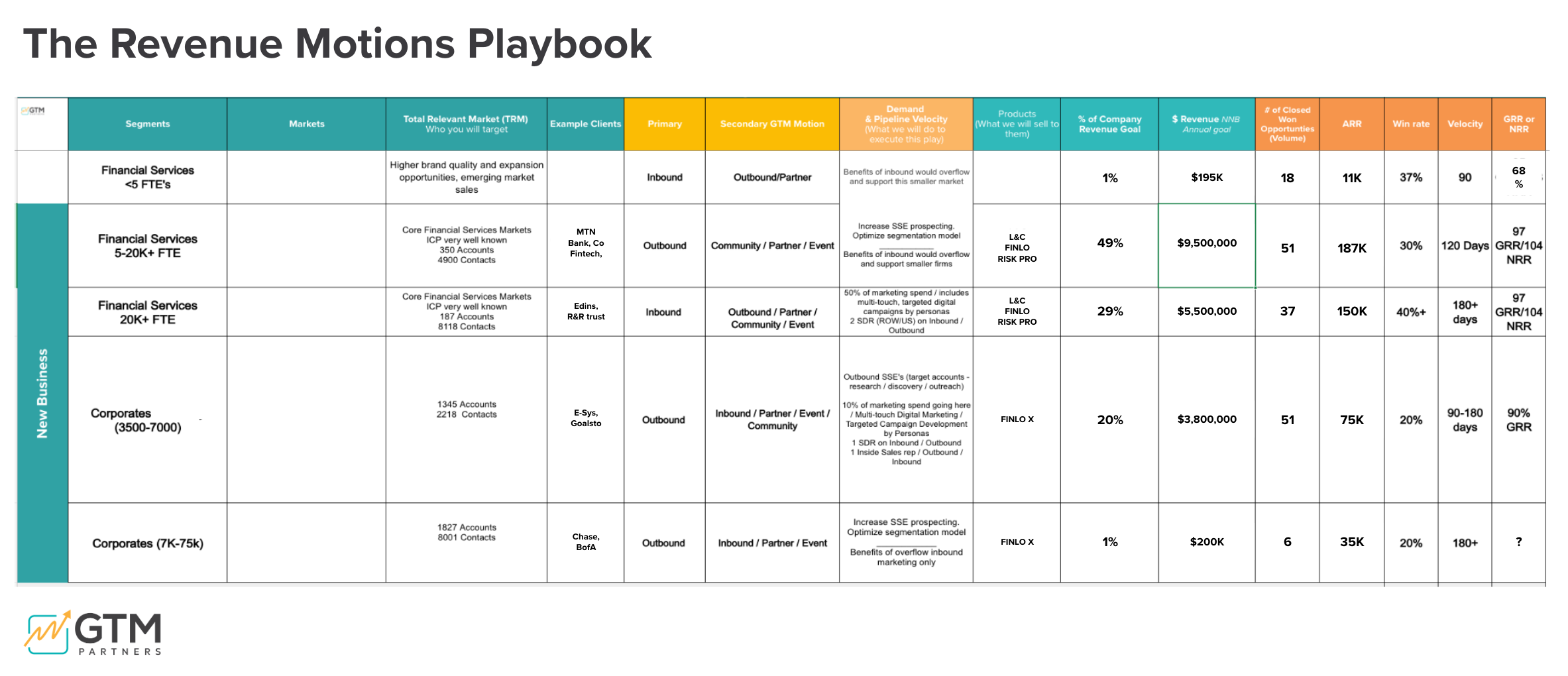
Revenue Motion = Segment + ICP + Product + GTM Motion + Ownership
A Revenue Motion is a deliberately designed, end-to-end growth system that connects a specific buyer segment to a specific product offer, using a tailored GTM motion with unambiguous cross-functional ownership.
Why Revenue Breaks as Companies Grow
Most B2B companies don’t stall because they lack effort. They stall because growth becomes accidental.
Common executive symptoms: Marketing, Sales, Product, and CS are busy but misaligned; new hires don’t know what “good” looks like; multiple GTM motions exist without clear definition; headcount grows faster than revenue efficiency; and leaders debate tactical activities instead of deciding where to focus. What’s missing isn’t talent or tooling—it’s a shared operating model for how revenue actually flows through the business.
The Core Insight: Growth Happens Through Revenue Motions
Every company grows through a finite set of repeatable revenue motions—whether they’ve named them or not.
If those motions aren’t explicit, the business is still running on them—they’re just unmanaged. Growth doesn’t come from doing more things; it comes from running the right systems well.
What a Revenue Motion Actually Is
A Revenue Motion is the atomic unit of growth connecting Segment + ICP + Product + GTM Motion + Ownership.
A Revenue Motion is not a funnel, campaign, sales methodology, or reporting view. It is a deliberately designed, end-to-end growth system that connects a specific segment and ICP to a specific product, using a GTM motion designed for that context, with clear ownership across the GTM organization.
Why Funnels Aren’t Enough Anymore
Funnels describe volume. Revenue motions explain mechanics.
Traditional funnels assume one buyer journey, one primary path to revenue, and one dominant selling motion. Modern B2B reality involves multiple segments, multiple products, varied buying behaviors, and multiple GTM motions running in parallel. Executives don’t need another generic funnel diagram; they need clarity on how revenue actually gets created.
A Decision System for Executive Leadership
A playbook is only valuable if it drives executive decisions. The Revenue Model Playbook enables leadership teams to answer five foundational questions:
What a Revenue Model Playbook Really Is
A Revenue Model Playbook is not documentation—it is an executive decision system.
It exists to answer five executive-level questions: 1. How do we grow revenue today? 2. How should we grow revenue tomorrow? 3. Where should we invest? 4. Where should we stop investing? 5. How do we know if our strategy is working? If it doesn’t enable decisions, it’s not a playbook.
Designing Revenue Motions (Instead of Discovering Them by Accident)
Deliberate design creates intentionality, visible tradeoffs, and strategic focus.
Most companies already have revenue motions—they just haven’t designed them. The result is opportunistic growth, mixed market signals, conflicting priorities, and endless inspection cycles. Design makes motions explicit, tradeoffs visible, and growth intentional.
Prioritization Is the Hidden Power of the Playbook
Focus isn’t a leadership personality trait; it’s a structural outcome.
Seeing revenue motions side-by-side allows leadership teams to compare effort versus impact, identify hidden complexity traps, and make tradeoffs explicit across growth capital and team capacity.
Why Metrics Fail Without a Growth Model
Without revenue motions, metrics lack context—forcing leaders to default to inspection instead of insight.
Most companies track marketing-sourced pipeline, sales-sourced pipeline, bookings against goal, and revenue by product line. In isolation, any of these can look good or bad. Without revenue motions, metrics lack context, causing leaders to inspect activities endlessly rather than diagnosing system health.
Measuring Velocity & Economic Durability
Short-term pipeline volume is a vanity metric. Durable growth is governed by historical unit economics and pipeline velocity calculated per individual revenue motion:
Pipeline Velocity Reveals Which Motions Work
Velocity makes pipeline actionable by showing which systems accelerate and which create drag.
Pipeline velocity measures how quickly opportunity turns into revenue (Opportunities × Win Rate × ACV ÷ Cycle Length). When measured by individual revenue motion, dashboards become true decision signals that highlight which growth engines are accelerating and which are dragging down business performance.
Performance Metrics Are System Evaluators, Not Team Scorecards
The purpose of metrics isn’t to inspect people; it’s to evaluate systems.
Metrics must reveal which revenue motions work, which need redesign, and which should be deprioritized. When metrics are tied to revenue motions, accountability becomes fair, constructive, and productive across functions.
Short-Term Performance Does Not Equal Durable Growth
A motion can generate pipeline and hit quarterly targets while still being an economically broken long-term investment.
Short-term spikes often disguise non-ICP customers, heavy discounting, or unsupportable service burdens. Durable growth is an economic question that must be evaluated beyond quarterly bookings.
Historical Economics Decide What Scales
Growth that doesn’t compound isn’t growth—it’s churn in disguise.
The ultimate decision layer is historical unit economics by revenue motion: Net Revenue Retention (NRR), Gross Revenue Retention (GRR), Customer Lifetime Value (CLTV), Customer Acquisition Cost (CAC), and gross margin. These determine whether growth strengthens or weakens the enterprise.
Designing GTM Motions in Context
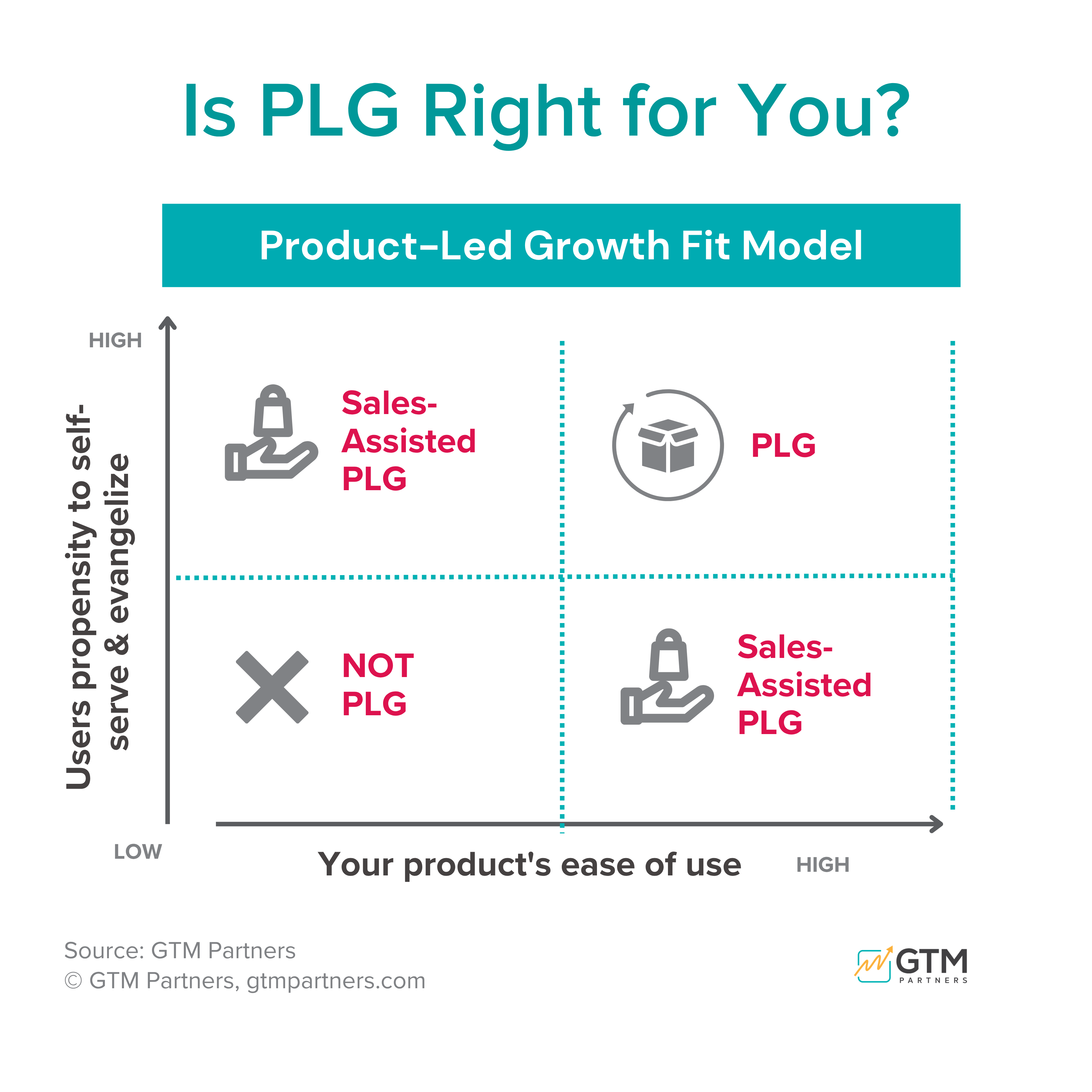
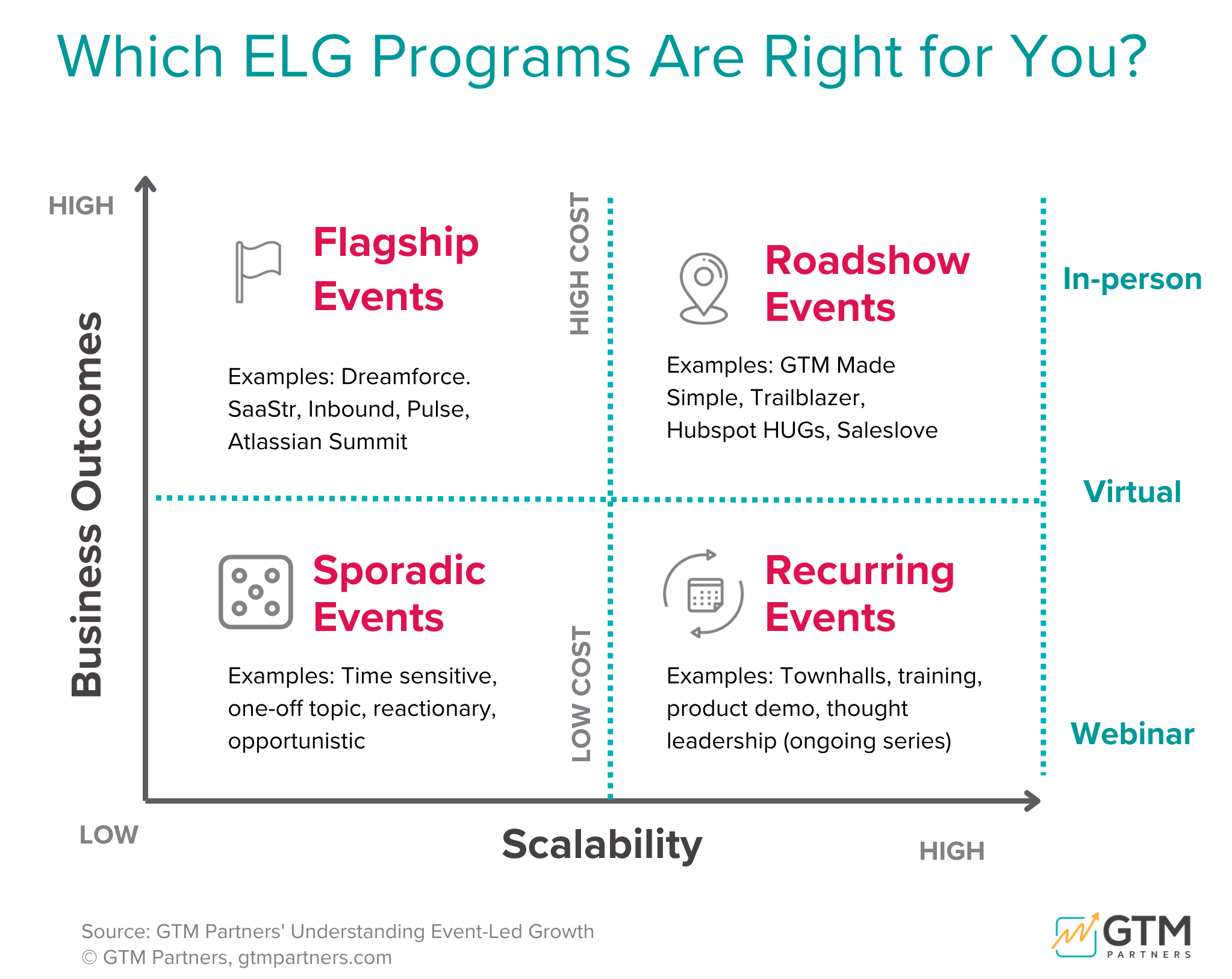
GTM motion labels (Inbound, Outbound, PLG, Partner, Event, Community) only describe demand levers. They become revenue systems when customized for specific customer tiers and operational swimming lanes:
The Six GTM Motions—and Their Role
Inbound, Outbound, PLG, Partner, Event, and Community describe how demand is created—not complete revenue systems.
The 6 GTM motions define the mechanisms for generating and converting interest. However, a GTM motion is only one component of a full Revenue Motion. To drive repeatable revenue, the motion must be paired with a defined segment, product offer, and operational ownership.
Why GTM Motions Must Be Designed Inside Revenue Motions
A Revenue Motion doesn’t reuse a GTM motion blindly—it designs it in context.
For example, Outbound for SMB may involve high-velocity SDR dialing, automated sequences, and fast qualification. Outbound for Enterprise requires a tightly defined named-account list, multi-threaded ABM orchestration, and senior executive engagement. Same motion label; completely different revenue systems.
Revenue Motions Are the Organizing Glue
Revenue motions are the central architecture connecting strategy to execution, metrics to decisions, and investment to outcomes.
When revenue motions are explicit and managed, growth becomes intentional, tradeoffs become visible, and executive leadership regains true operational leverage.
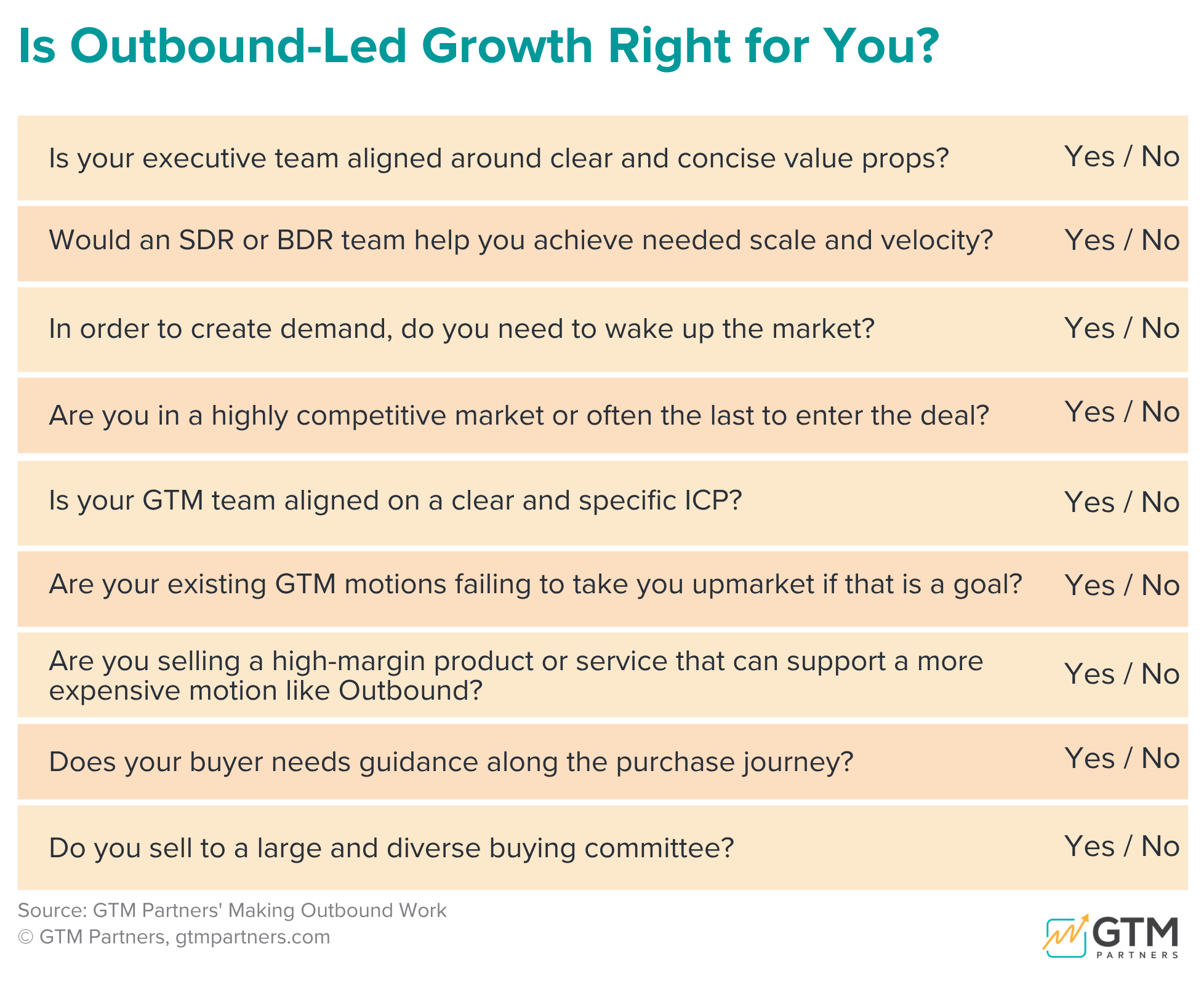
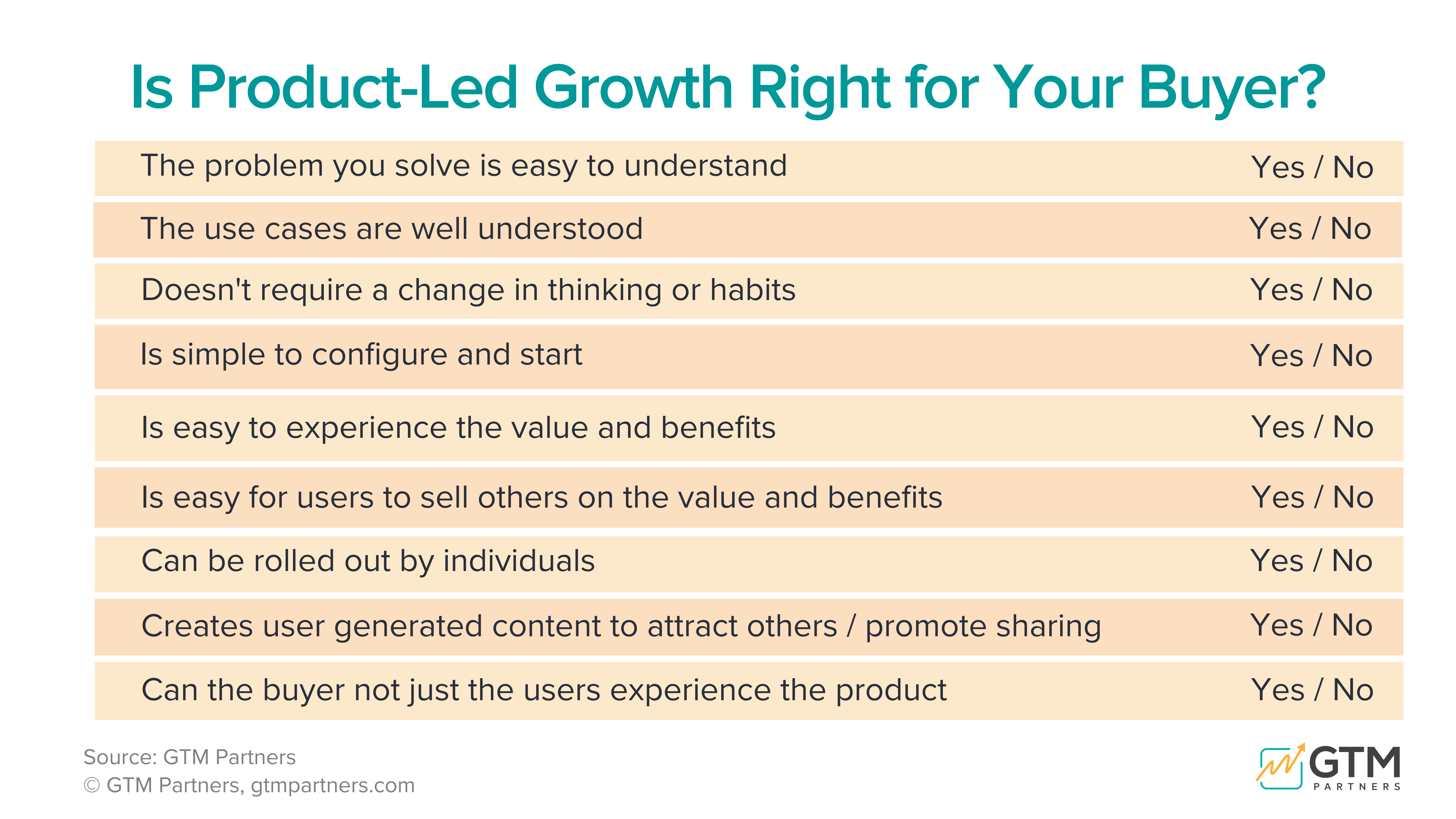
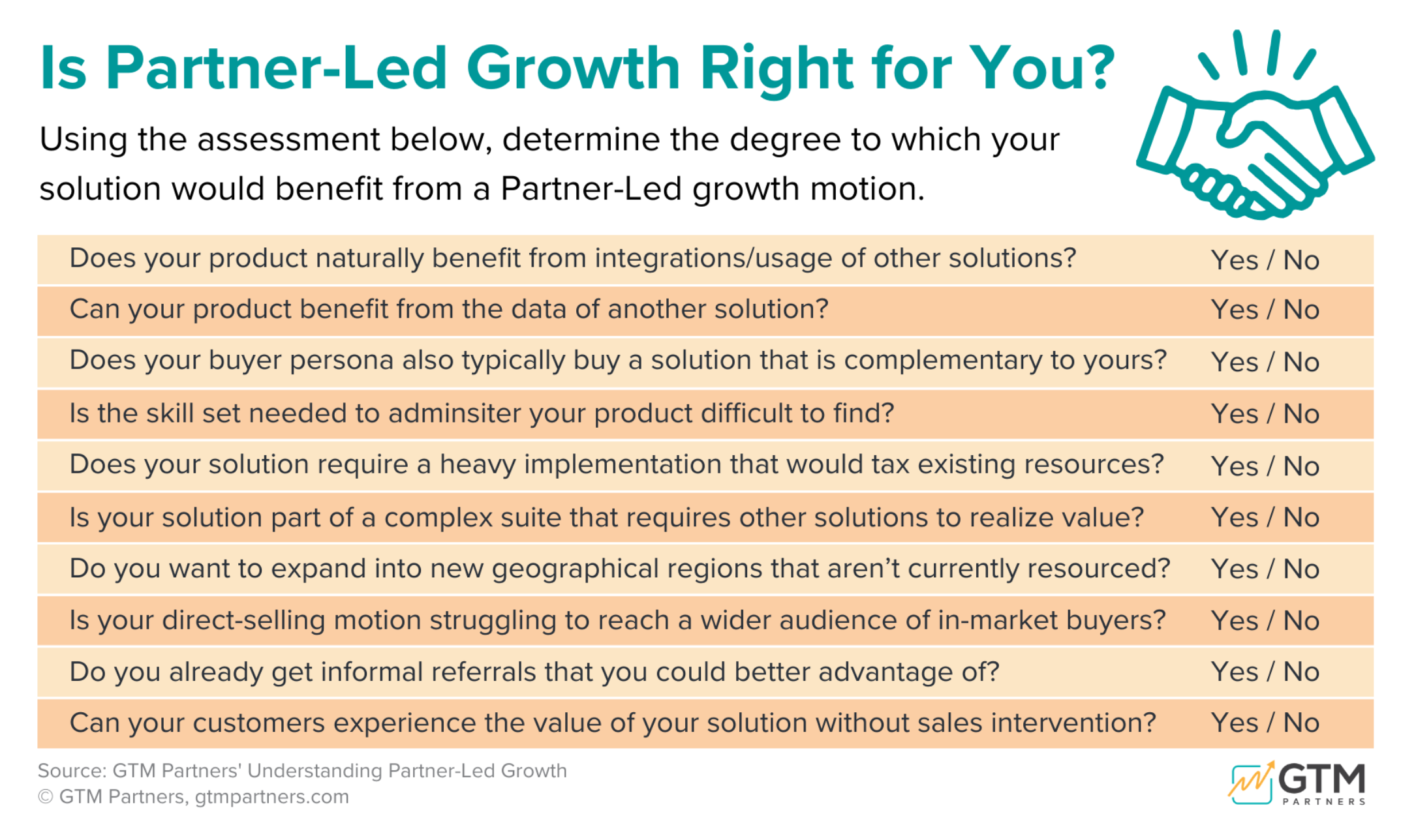
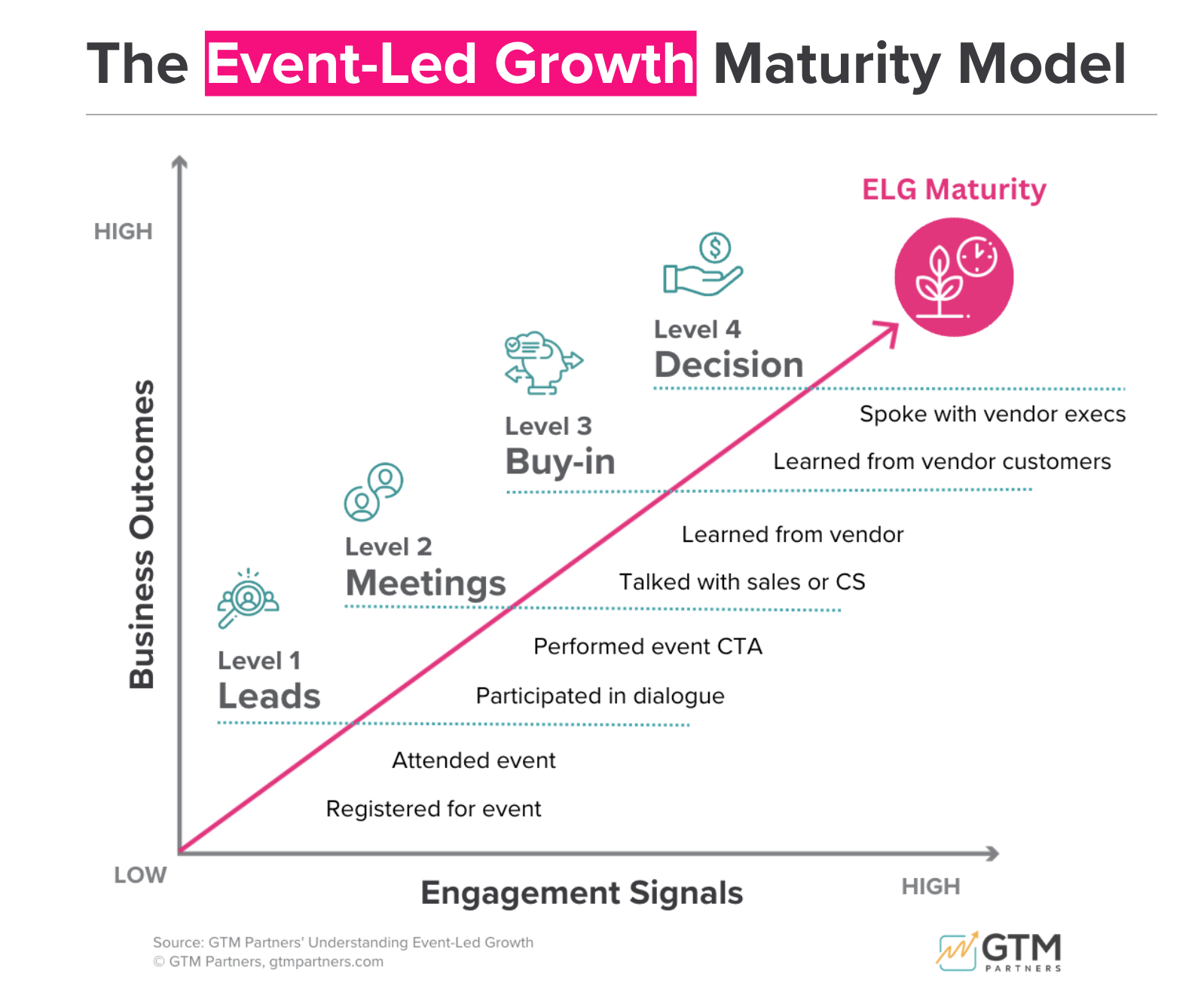
Motion Readiness & Qualification Assessments
Where the Playbook Fits in the GTM Operating System™
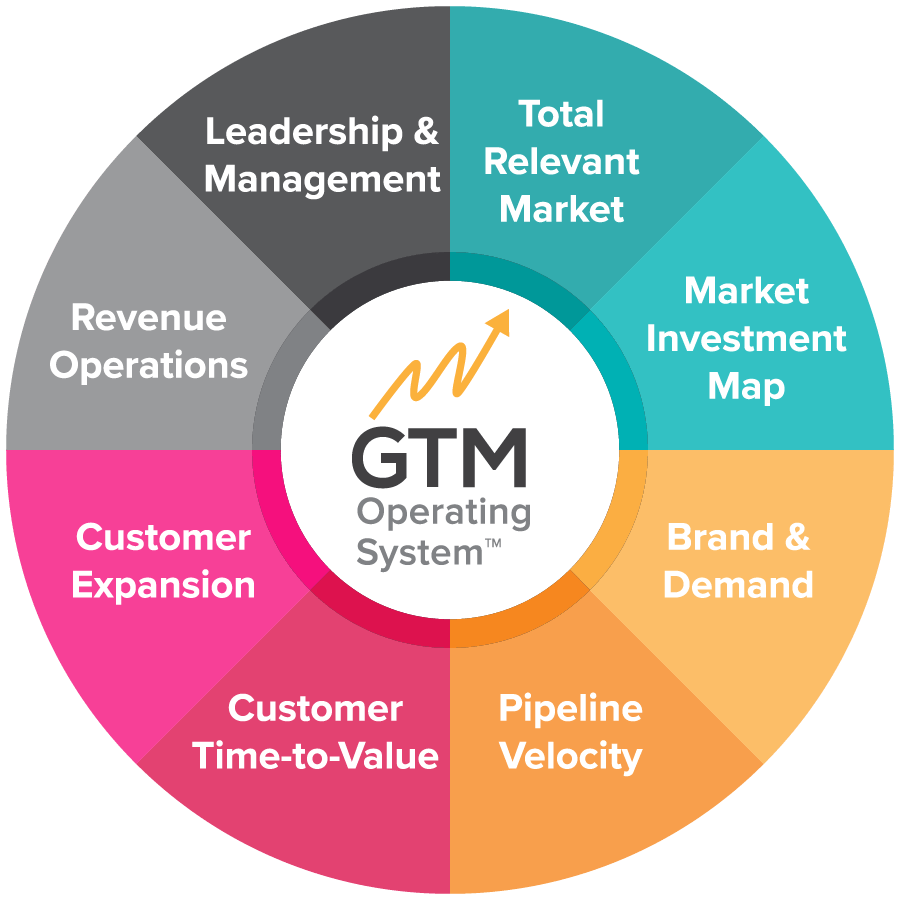
The Revenue Model Playbook is not a standalone concept—it is the natural outcome of running on the GTM Operating System. The first four pillars work together to build your playbook:
When these pillars unite, companies don’t just gain insight—they arrive at a clear, shared Revenue Model Playbook that the entire organization can execute against with predictable results.
What RevOps Leaders Say About Motion Architecture
Perspectives on establishing a cohesive operating framework and standardized vocabulary.
"Future-proof your annual planning with the GTM OS, establishing a cohesive framework and standardized, executive-level vocabulary for cross-departmental clarity."
Build Your Company’s Revenue Model Playbook
Work with a certified GTM OS partner to map your current revenue motions, isolate complexity traps, model pipeline velocity, and establish explicit growth priorities.