
The CEO ManifestoWhy Go-to-Market Must Be CEO-Owned
The executive philosophy behind running go-to-market as a company-wide operating system rather than a collection of disconnected departmental strategies.
 Framework Library
Why CEOs Cannot Delegate Go-to-Market
Business transformation doesn’t happen through strategy slides alone — it happens through execution, alignment, and ownership at the highest level.
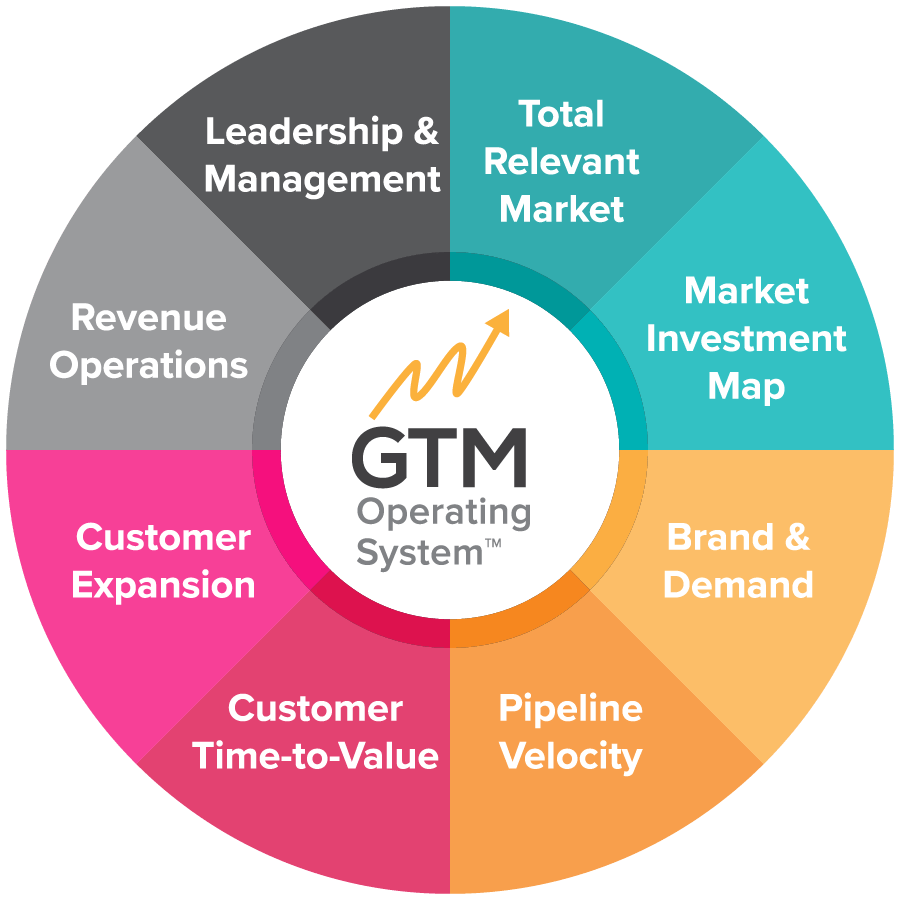
As CEO, you can delegate sales quota execution or marketing campaign delivery, but you cannot delegate Go-to-Market. GTM is not a department; it is the operating system that connects your company’s purpose to customer value realization.
“You don’t have a marketing problem. You don’t have a sales problem. You don’t have a CS problem. You have a go-to-market problem.”
Trying to fix growth by tweaking departments in isolation never works. Enduring scale requires cross-functional alignment around a shared operating system.
GTM is a Transformational Process, Not a Strategy
GTM is not a project, a campaign, or a product launch. It is a continuous, iterative operating process that evolves as the business scales. Companies that scale treat GTM as an enduring system requiring constant refinement.
Business Transformation Happens in Teams
You cannot fix Marketing and think you’ve fixed GTM. Misalignment between Marketing, Sales, Product, and CS is the #1 barrier to scale. True transformation requires breaking down silos so the organization operates as one revenue engine.
Systems > Goals
“You do not rise to the level of your goals. You fall to the level of your systems.” Setting ambitious revenue targets is meaningless without repeatable, cross-functional operating systems to execute them.
NRR is the #1 Metric of Business Health
Net Revenue Retention (NRR) is the ultimate truth of business health. If you cannot retain and expand existing customers, acquiring new ones won’t save you. CEOs must prioritize NRR over vanity top-of-funnel metrics.
GTM is the Business. The CEO Owns It.
GTM is not a department — it is the operating system of your entire business. As CEO, your job is not just to close deals, but to build an operating discipline that makes sustainable, scalable growth inevitable.
The 8 Questions Every CEO Must Answer
The CEO’s role is to ensure the executive team has clear, data-grounded consensus on the 8 critical decisions of the GTM Operating System:
Lead Your GTM Transformation with Confidence
Work with an executive GTM OS coach or certified partner to run cross-functional alignment sessions, install the Executive Scorecard, and lead GTM transformation from the top.