Navigating Complex Sales Cycles & Multi-Stakeholder Buying
Apply GTM OS to long sales cycles, relationship-led buying committees of 8–15 decision makers, delivery handoffs, and multi-stakeholder customer decisions. Align commercial strategy with delivery capacity, escape commoditization RFP price traps, and turn account management into systematic account expansion.
“In Complex B2B, the real commercial challenge is not just closing deals, but orchestrating a seamless, value-driven journey from multi-stakeholder consensus through profitable delivery and systematic account expansion.”
 Use Cases Hub
When Multi-Stakeholder Complexity Stalls Pipeline Velocity
In Complex B2B businesses—spanning enterprise technology, professional services, industrial solutions, and specialized distribution—growth is never linear. Deals involve 6 to 18-month buying cycles, multi-layered committees of 8 to 15 stakeholders, and intricate operational handoffs from sales to delivery.
Growth breaks when companies treat complex sales as simple volume transactions. Sales reps make custom promises that delivery teams cannot fulfill profitably, commoditization forces companies into margin-destroying RFP bidding wars, and account expansion remains trapped in passive relationship management rather than systematic account growth.
Extended Sales Cycles & Pipeline Stagnation
Sales cycles spanning 6 to 18 months cause pipeline opportunities to stall in evaluation limbo. Without rigorous milestone-driven stage progression, deal velocity decelerates and revenue forecasting becomes subjective guesswork.
Multi-Stakeholder Consensus Breakdown
Enterprise buying committees feature 8 to 15 decision makers across executive, technical, operational, and procurement roles. A single misaligned stakeholder or lack of consensus late in procurement collapses high-value deals.
Sales-to-Delivery Handoff Fractures
Sales reps negotiate custom scopes or unverified technical deliverables to close contracts. When delivery and operations teams inherit these promises, implementation friction spikes, margins erode, and client trust suffers.
Commoditization & RFP Price Traps
Without a sharply differentiated point-of-view, companies get dragged into competitive RFP bake-offs where buyers treat the solution as an undifferentiated commodity, destroying gross margins and pricing power.
Lack of a Differentiated Market Point of View
Marketing collateral focuses on generic capabilities and feature lists rather than articulating a provocative point of view that redefines the buyer’s problem, shifts RFP criteria, and establishes thought leadership.
Expansion Trapped in Relationship Management
Commercial teams focus on maintaining comfortable client relationships and renewals rather than executing a structured account growth system that maps white space, uncovers new business units, and drives high-margin expansion.
In complex commercial environments, growth is won upstream through a differentiated point of view and protected downstream through profitable delivery. GTM OS™ provides the structural backbone to align both.
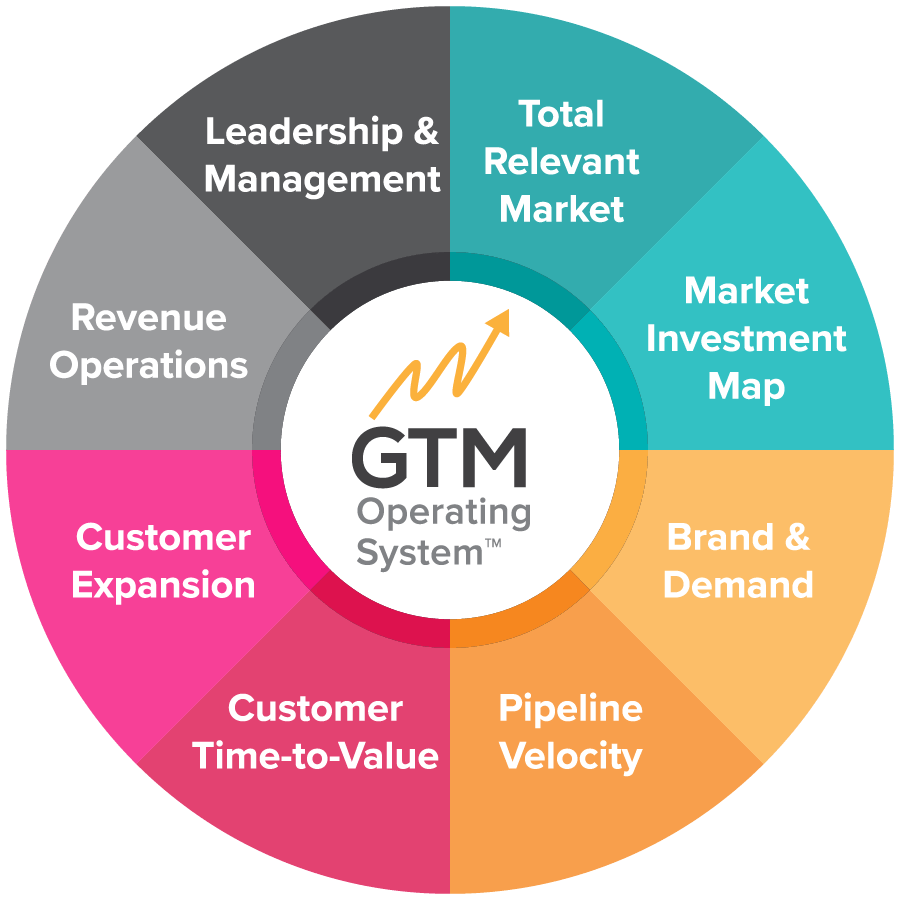
How GTM OS™ Is Applied to Complex B2B Businesses
Define Total Relevant Market & Map the Buying Committee
Move beyond broad industry classifications to define the Total Relevant Market (TRM): the specific account tiers, delivery conditions, and technical requirements where your company has genuine delivery advantages. Map all 8 to 15 roles inside the buying committee to address specific stakeholder objections.
Where can we win and deliver with the highest profitability, and which stakeholders hold the veto power?
Establish a Differentiated Point of View to Escape RFP Traps
Develop a provocative, authoritative market Point of View (POV) that reframes the customer’s commercial problem before formal procurement requests are written. Position your business as an indispensable strategic advisor, shifting buyer criteria away from commoditized price competition.
How does our point of view reframe the customer’s problem so they buy on strategic value rather than commoditized price?
Optimize Pipeline Velocity & Multi-Stakeholder Deal Stages
Restructure pipeline stages around verifiable customer buying milestones rather than internal sales rep tasks. Implement disciplined stage gating—including technical feasibility and delivery sign-offs—to protect delivery margins before proposals are issued.
Which specific buying committee stages are causing our deals to stall, and how do we build consensus faster?
Connect Customer Time-to-Value to Systematic Account Expansion
Ensure that initial project delivery confirms tangible business ROI quickly. Translate successful delivery milestones into an intentional, account-based expansion roadmap across additional business units, regions, and service categories.
What verifiable proof of ROI must we deliver to earn the right to expand across additional divisions and use cases?
What Changes When Complex B2B Execution Is Coordinated
Accelerated Sales Velocity Across Complex Committees
Multi-stakeholder engagement playbooks guide buyers through consensus milestones, reducing deal stagnation and shortening 6–18 month sales cycles.
Higher Win Rates & Freedom from RFP Price Traps
An authoritative point-of-view reframes buyer evaluation criteria before formal RFPs are issued, allowing the company to command premium pricing.
Protected Delivery Margins & Operational Integrity
Disciplined commercial-to-delivery handoffs prevent custom scope creep, ensuring closed contracts are delivered on time and at planned gross profit margins.
Systematic Multi-Year Account Expansion
Installed-base management transitions from passive renewals into an engineered growth engine, unlocking high-margin expansion across enterprise divisions.
Cross-Functional Cohesion from Sales to Delivery
Business development, delivery, operations, and executive leadership operate with aligned incentives, transparent pipeline metrics, and shared accountability.
Core Complex B2B Capabilities
Predictable Commercial Execution for Complex B2B
How executive leaders of services, industrial, and complex enterprise businesses use GTM OS to escape RFP traps and accelerate account expansion.
"It's a fantastic, comprehensive framework that, despite any current operational pressures, is a worthwhile investment of executive time for long-term strategic benefit."
"TRM helped us move from a binary “yes/no” ICP label to a tiered model. Weighting and scoring lets us define Tier 1 vs Tier 2 accounts, so prioritization becomes clear and repeatable."
"One of the biggest realizations for us as a leadership team was the importance of the sales-to-service handoff. We recognized that if leadership doesn't create alignment across teams, what sales promises and what service delivers can easily drift apart."
Orchestrate Your Complex Commercial Engine
A Certified GTM OS Partner can help your commercial and delivery teams map buying committee consensus, escape RFP commoditization through a differentiated POV, and turn delivery outcomes into predictable expansion.