The TEAM FrameworkTarget, Engage, Activate, Measure — The Operating Model for Modern Account-Based GTM
The category-defining framework pioneered by Sangram Vajre & Bryan Brown. Turn disconnected cold outbound and vanity marketing into a synchronized, account-centric engine that accelerates pipeline velocity and win rates.
 Framework Library
Why ABM / ABX Is the Core Foundation of the Outbound-Led GTM Motion
For the past decade, B2B companies scaled outbound revenue through sheer brute force: scraping email lists, hiring armies of SDRs, and blasting automated cold cadences into corporate inboxes.
Today, that playbook is completely broken. Spurred by AI-generated spam, privacy regulations, and overwhelmed executive buyers, response rates to cold outbound have plummeted below 1%. Meanwhile, B2B purchasing has evolved: decisions are no longer made by isolated individuals clicking email links—they are made by consensus buying committees of 6 to 10 stakeholders evaluating solutions over months in the dark funnel.
This is why Account-Based Marketing (ABM) and Account-Based Experience (ABX) are no longer just tactical marketing campaigns. ABX is the central operating discipline required to make an Outbound-Led Go-to-Market Motion work efficiently.
Cold Outbound vs. Account-Based Orchestration
Traditional outbound sends cold messages to unengaged strangers, resulting in high burn rates and rep turnover. The TEAM Framework surrounds the entire buying committee with personalized value and multi-channel engagement, ensuring that when sales activates, the account is already educated, aligned, and receptive.
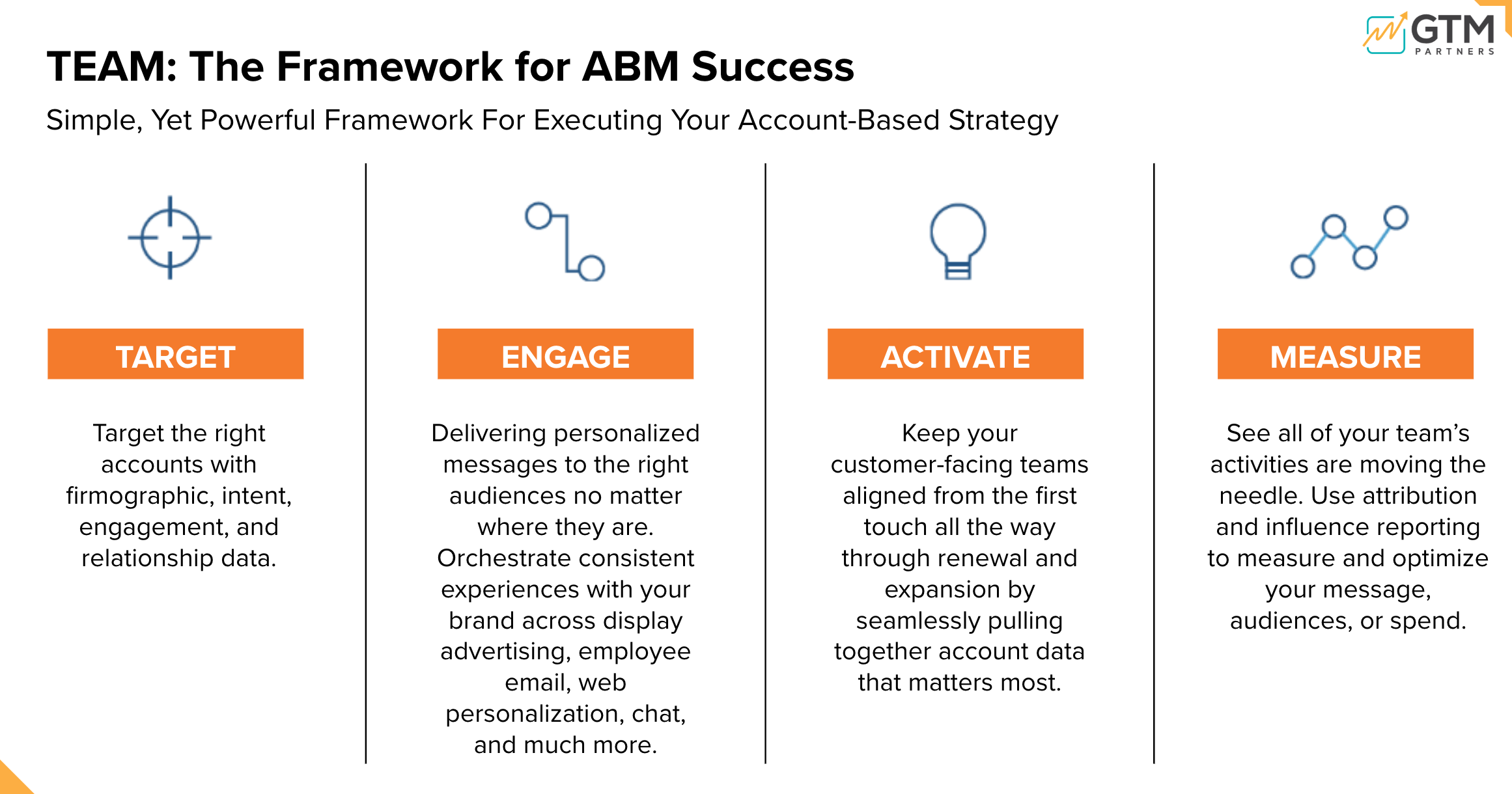
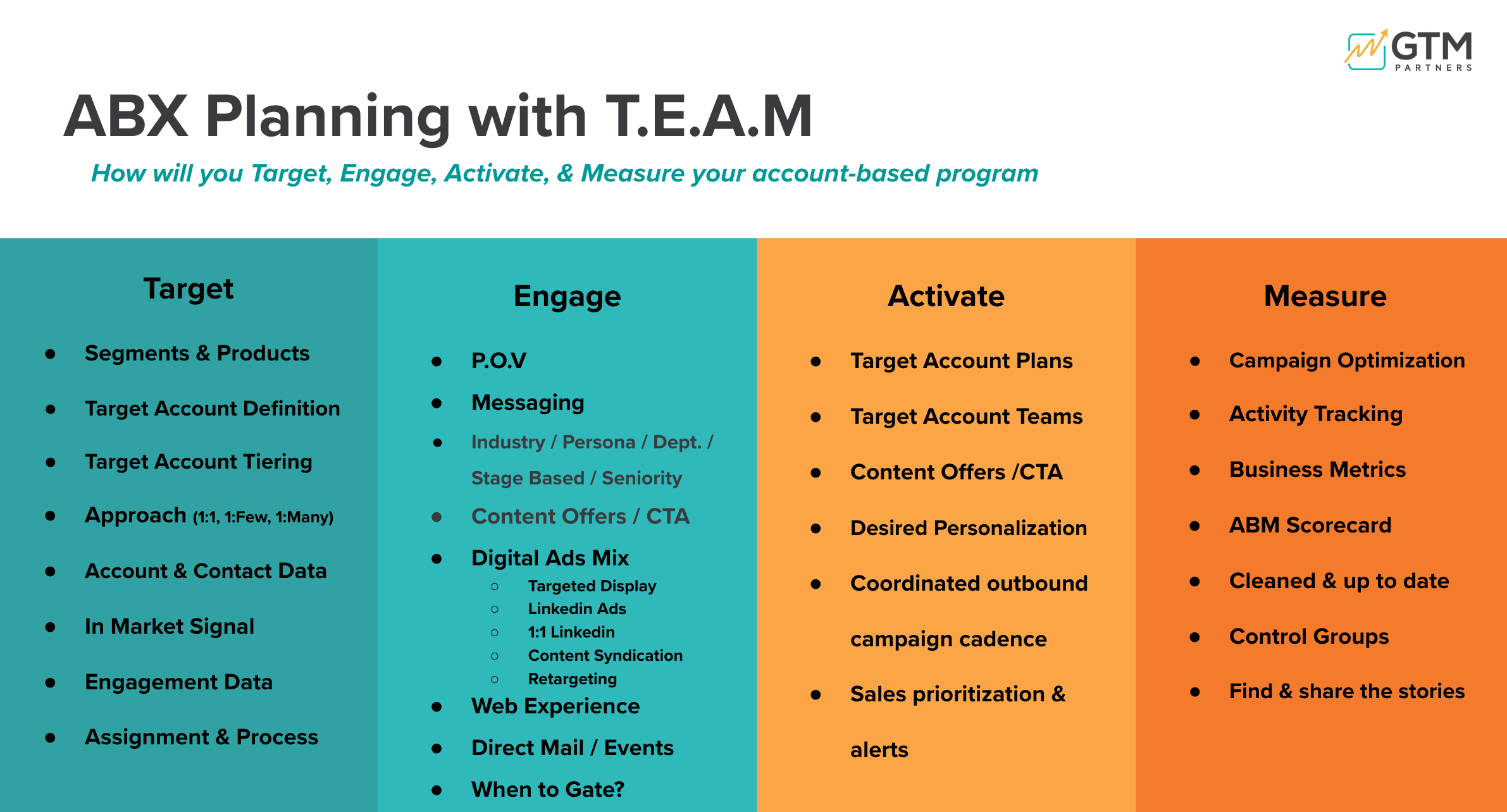
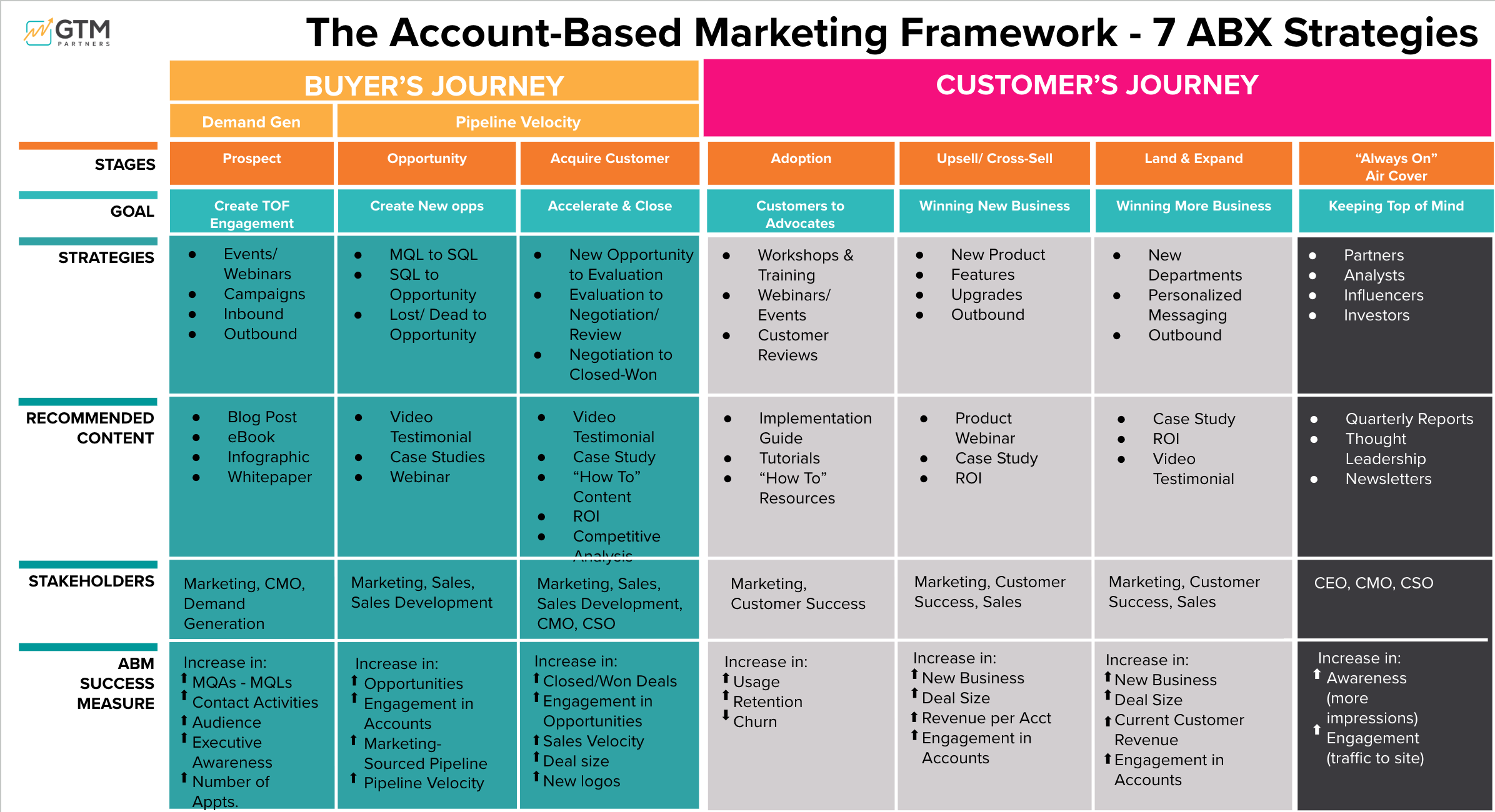
The T.E.A.M. Operating Architecture
A continuous, cross-functional cycle that aligns Marketing, Sales Development, Account Executives, and Customer Success around your highest-value accounts.
01. Target
Targeting is the foundational discipline of moving away from broad, wasteful TAM pursuing everyone, to an actionable, prioritized Total Relevant Market (TRM). Rather than generating random individual leads, revenue teams identify and tier high-propensity accounts based on firmographics, technographics, qualifying internal realities, and verified in-market intent signals.
02. Engage
B2B purchases are never made by a single person—modern buying committees include 6 to 10 stakeholders across executive leadership, finance, operations, and security. Engage orchestrates coordinated multi-channel touches (account-based digital ads, bespoke content, curated executive roundtables, direct mail, and social proof) to build consensus and trust before reps ever request a meeting.
03. Activate
Activate bridges the traditional gap between marketing signals and sales execution. When an account demonstrates qualified engagement and cross-functional intent (reaching MQA status), RevOps alerts BDRs, Account Executives, and Customer Success with pre-built plays, persona-tailored talk tracks, and context on what topics the buying committee is researching.
04. Measure
Legacy lead volume (MQLs) creates friction because individual form-fills rarely correlate with closed deals. Measure aligns the entire C-suite around account-centric business health: Account Engagement Depth, Pipeline Velocity by Motion, Average Contract Value (ACV) lift, Win Rates on ICP accounts, and long-term Net Revenue Retention (NRR).
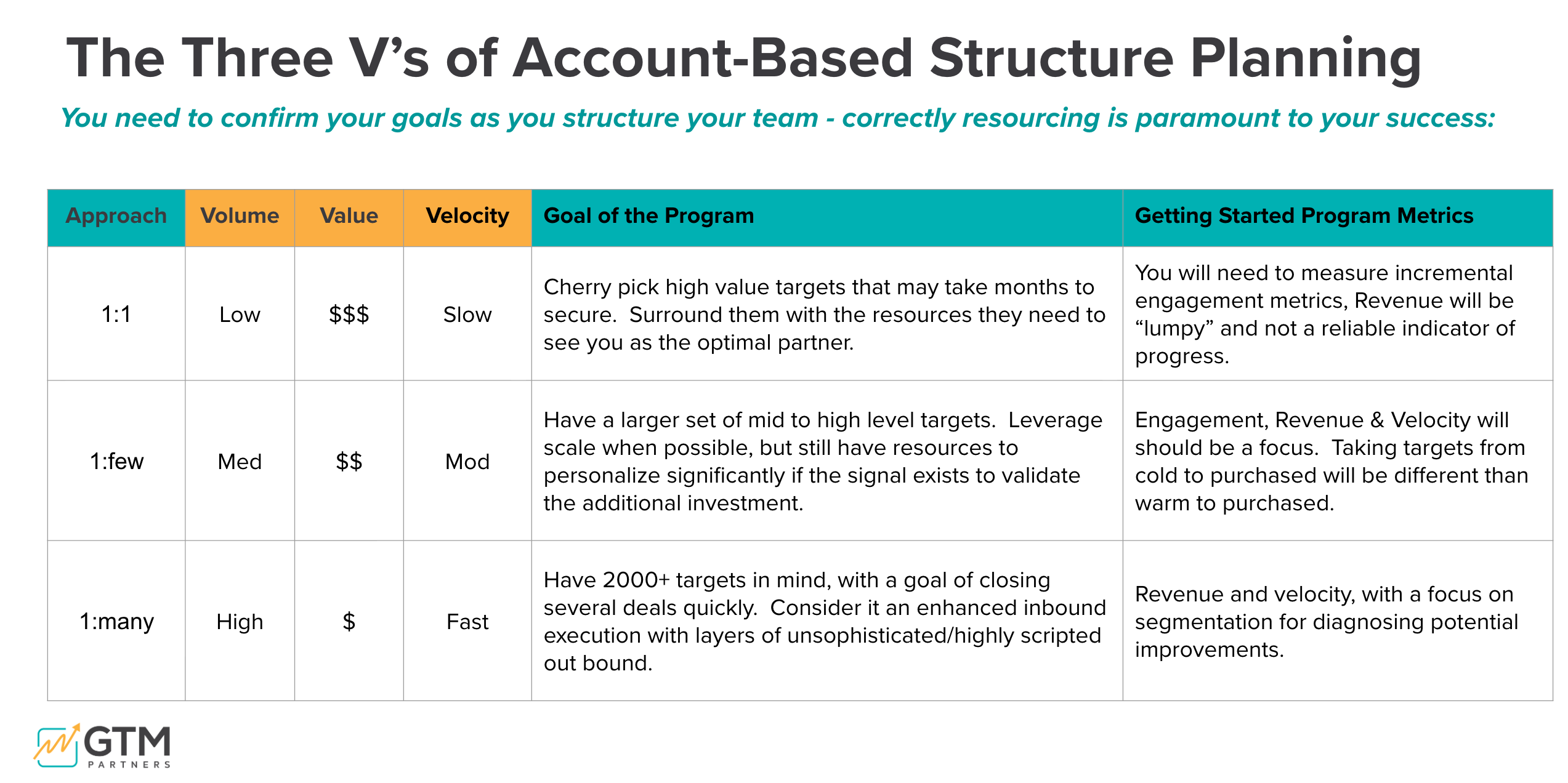
The 3 Vs of ABX Planning: Volume, Velocity, and Value
Account-based planning requires leadership to balance three interdependent revenue dimensions. Rather than chasing infinite lead volume, revenue teams calibrate:
1. Volume
The right sizing of target accounts per rep and tier, ensuring commercial capacity is concentrated where win rates are highest.
2. Velocity
The speed at which target accounts transition from dark funnel awareness to pipeline, evaluation, and closed-won revenue.
3. Value
The average deal size, expansion multiple, and lifetime value unlocked by closing multi-threaded, high-fit enterprise accounts.
The ABX Strategies Playbook: 1:1, 1:Few, and 1:Many Orchestration
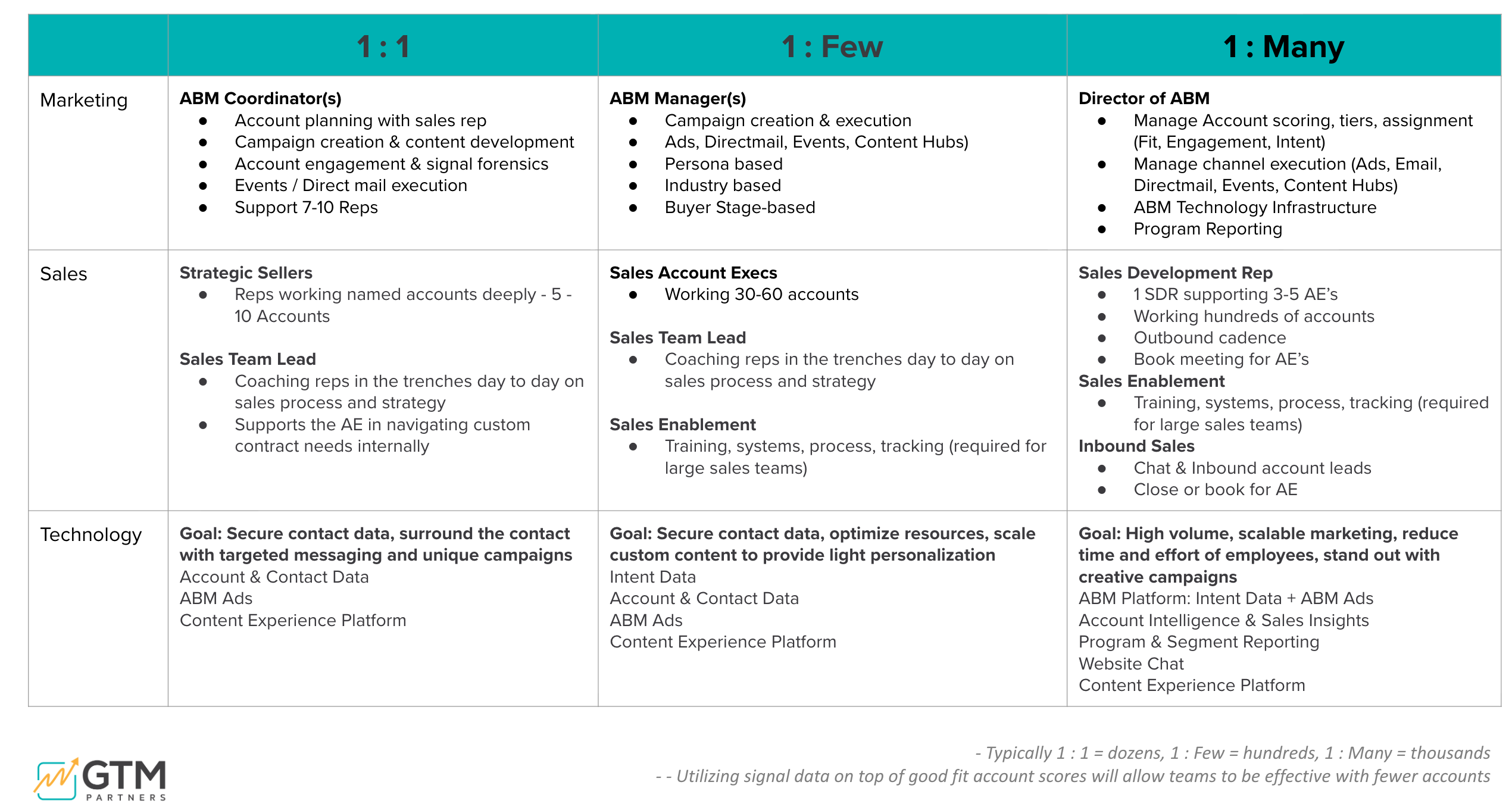
Account-based execution is not one-size-fits-all. Category leaders tier their Total Relevant Market into three distinct investment tiers to maximize ROI and sales productivity:
Who Should Use the TEAM Framework?
High-Propensity Fit
- Annual Contract Values > $25,000: Where deal economics justify dedicated, high-touch account orchestration.
- Complex Buying Committees: Multi-stakeholder sales involving finance, security, IT, and line-of-business executives.
- Outbound-Led Revenue Motions: Companies shifting away from passive inbound to proactive enterprise account acquisition.
- Expansion into Strategic Accounts: Account-based upserving for existing customer growth (Pillar 6).
When NOT to Use Pure ABM
- Low-ACV Self-Serve PLG (< $2K ACV): High transaction volumes with short cycles are better served by automated product analytics.
- Ill-Defined ICP: If leadership cannot agree on who the ideal customer is, launching ABM will merely accelerate marketing waste.
- Siloed Leadership: If Sales and Marketing maintain separate pipeline targets without a shared RevOps scorecard.
How to Operationalize the TEAM Framework in 6 Steps
Define & Validate Your Total Relevant Market (TRM)
Run the Pillar 1 ICP scoring rubric (-5 to +5) across your target segments. Agree with sales leadership on the exact list of named accounts you will pursue this quarter.
Tier Accounts into 1:1, 1:Few, and 1:Many Cohorts
Allocate marketing budget and rep capacity proportionally: Tier 1 (bespoke high-touch for top 50 accounts), Tier 2 (clustered industry messaging for top 250), and Tier 3 (programmatic air cover).
Map the Buying Group Personas & Tailor the Point of View (POV)
Document the specific pain points and ROI motivations for every role in the committee (Economic Buyer, Technical Evaluator, Executive Sponsor, User Champion).
Define Marketing Qualified Account (MQA) Thresholds
Establish multi-signal criteria in your RevOps stack: e.g., 3+ unique personas visiting high-intent solution pages or consuming content within a 14-day window.
Install Triggered Sales Plays for Rapid Outreach
When an account trips the MQA threshold, automatically route account intelligence to the dedicated AE/BDR pod with contextual messaging to initiate conversation.
Review Account Pipeline Velocity in Weekly Leadership Syncs
Evaluate account stage progression, buying committee engagement depth, win rate lift, and deal cycle compression on the Executive GTM Scorecard.
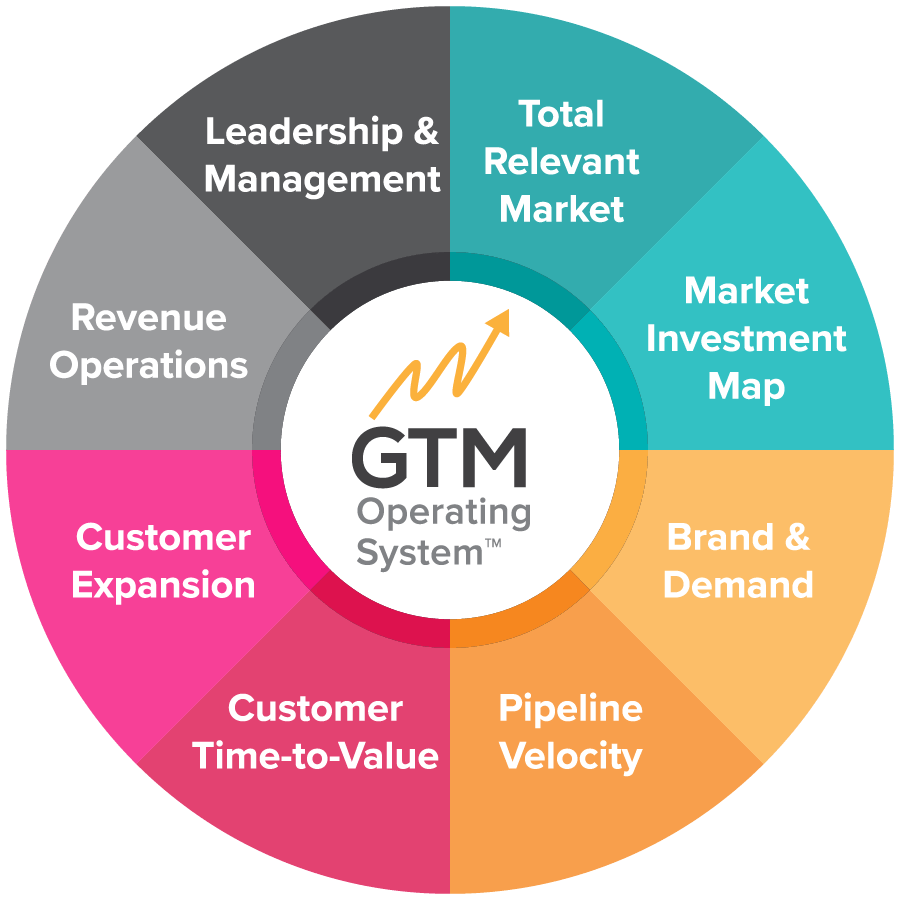
Mapping TEAM Into The 8 Pillars of GTM OS™
The TEAM Framework serves as the account-level operational engine within the broader company-wide GTM Operating System:
Total Relevant Market (TRM)
Defines the exact high-value account universe that feeds the Target discipline of ABM.
Brand & Demand (POV)
Provides the point of view, content assets, and multi-channel campaigns that surround buying committees.
Pipeline Velocity
Turns account engagement into high-converting revenue motions and disciplined rep sales plays.
Revenue Operations
Establishes the Executive GTM Scorecard to monitor account health, MQAs, and compounding NRR.
Transform Your Outbound Motion into an Account-Based Revenue Engine
Work with a Certified GTM OS Partner to define your TRM, install the TEAM operating model, and train your revenue team on coordinated account execution.