Turn Venture Capital Into Repeatable, Efficient Growth
VC-backed technology companies are being asked to do two things that were once treated as tradeoffs: grow fast and prove that growth is efficient. GTM OS helps leadership teams and boards align around the few market, product, and revenue decisions that make growth repeatable.
“Capital-efficient growth is not doing more with less. It is knowing exactly which market, product, and revenue motion deserve the next dollar—and having the operating system to prove it.”
 Use Cases Hub
Growth and Capital Efficiency Are No Longer Separate Goals
The post-ZIRP environment has changed the commercial reality. Capital is more selective, boards expect clearer paths to durable growth, and founders are under pressure to show that revenue performance is not dependent on continually adding headcount and spend.
The issue is rarely a lack of ambition or activity. Growth breaks when leadership has not aligned around the few market, product, and revenue decisions that make performance repeatable.
Premature Scaling Before Repeatability
Companies add AEs, SDRs, marketing programs, or new channels before they have proven a profitable ICP, a repeatable sales motion, and credible unit economics.
Lead Volume Masks Weak Conversion
Top-of-funnel activity can look healthy while conversion, deal velocity, win rates, and retention reveal that the company is attracting the wrong accounts or selling an unclear value proposition.
The Market, Product, and Motion Are Not Aligned
Teams pursue too many segments, use cases, products, and GTM motions at once—creating a fragmented revenue mix that is expensive to support and difficult to forecast.
Board and Leadership Teams Optimize for Different Outcomes
Founders may push for growth, functional leaders optimize departmental metrics, and boards focus on capital efficiency. Without a shared GTM operating model, those tensions become conflicting investments rather than explicit tradeoffs.
Planning Is Reactive Rather Than Systemic
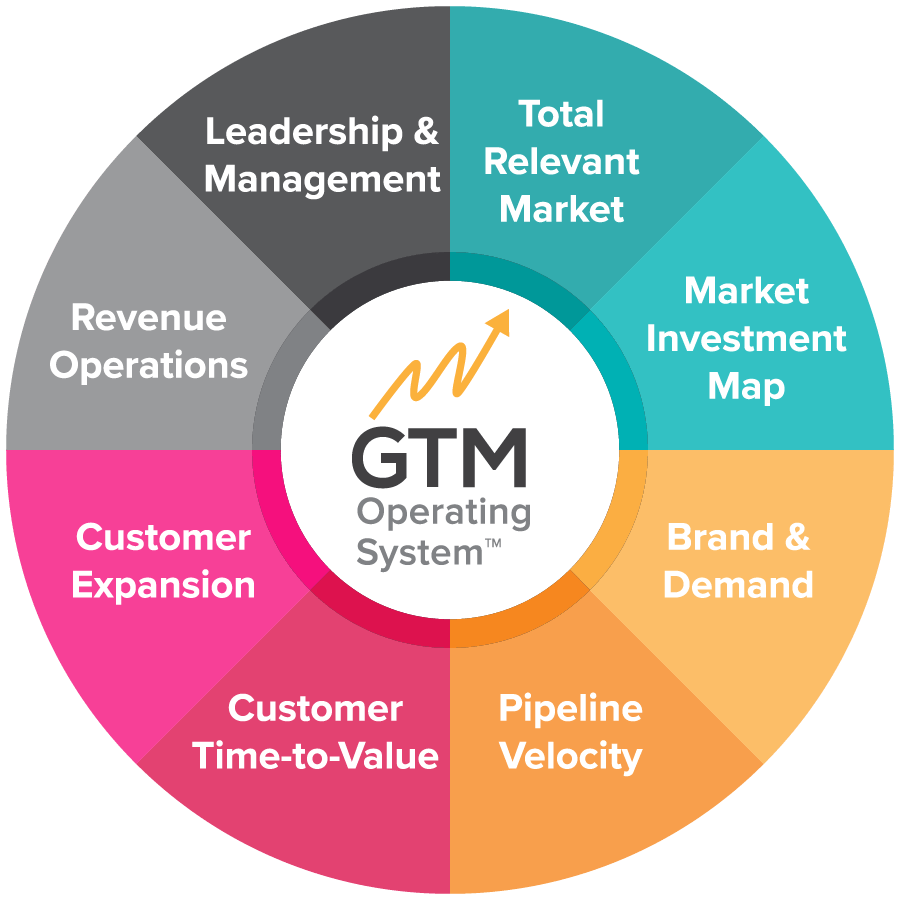
Teams respond to missed quarters with a reorg, new hire, campaign, or tool purchase—without first identifying whether the real constraint is market focus, product value, demand creation, pipeline velocity, customer time-to-value, or expansion.
The question is no longer simply, “How do we grow?” It is: “Which repeatable, profitable growth engine should we fund next—and what should we stop funding?”
How GTM OS™ Is Applied to VC-Backed Companies
Diagnose the Growth Constraint and Business Stage
Start by aligning the executive team and board-level stakeholders on the company’s current GTM reality: its 3Ps stage (Problem, Product, or Platform-Market Fit), current Valley of Death, top GTM problems, and the eight GTM OS diagnostic questions.
This prevents a common venture-backed failure mode: applying Platform-Market Fit investments—additional products, markets, motions, and teams—while the company is still trying to establish Product-Market Fit.
Do not fund the next stage before the current stage is repeatable.
A shared view of where growth is breaking now, rather than a collection of functional opinions about what to do next.
Focus the Total Relevant Market and Validate the ICP
Identify where the company can grow most efficiently: the segments, account characteristics, customer cohorts, and buying conditions most associated with repeatable and profitable outcomes.
Translate that intelligence into a real ICP—not a broad category or an isolated customer win, but the accounts the company can acquire, retain, and expand efficiently.
Which customers create the strongest combination of win rate, retention, expansion, and margin?
A prioritized market and ICP that gives Sales, Marketing, Product, Customer Success, and the board one shared definition of a high-value customer.
Build the Market Investment Map and Revenue Motions
Determine which products or solutions create the highest customer value for each priority segment—and where the company should invest, pause, or deprioritize.
Build a Revenue Motions view that connects each priority segment to the right product, GTM motion, ownership model, and revenue expectations:
The goal is not to activate every motion. It is to know which motions deserve investment and which ones do not.
A deliberate investment thesis for where revenue should come from—not merely a report on where it comes from today.
Improve Pipeline Velocity Through a 90-Day Operating Cadence
Translate strategic choices into measurable commercial execution: pipeline contribution, conversion, deal velocity, win rate, ACV, retention, expansion, and resource allocation by revenue play.
The leadership team runs a focused 90-day planning cadence: select the three to four highest-leverage GTM priorities, assign ownership, establish the scorecard, and revisit the system before issues compound into another missed quarter.
The 90-day cadence connects board-level strategy to weekly execution.
A capital-efficient operating rhythm that turns strategic alignment into accountable execution.
What Changes When Capital and GTM Strategy Are Aligned
A Shared Growth Thesis
Leadership and the board align on the company’s actual stage, primary GTM bottleneck, and the assumptions that must be validated before more capital is deployed.
A Credible Definition of Efficient Growth
The company moves beyond aggregate pipeline and bookings to understand performance by profitable ICP, segment, product, motion, and customer cohort.
Clearer Capital-Allocation Decisions
Leaders can make explicit decisions about where to add investment, where to reallocate resources, and which segments, motions, or initiatives should stop.
More Predictable Revenue Performance
Revenue planning is tied to the number of deals, conversion rates, pipeline requirements, velocity, and ownership required for each prioritized revenue play.
A Repeatable Board-to-Operator Cadence
The board receives a clearer operating view of GTM health, while management has a 90-day system for turning strategic alignment into accountable execution.
Core Venture Growth & Governance Capabilities
Predictable Commercial Execution for Venture-Backed Scale
How founders, CEOs, and venture investors use GTM OS to calibrate ICP focus and build compounding valuation multiples.
"We didn’t want TRM to be a slide—so we embedded ICP score right next to MEDDIC in forecast calls. If a rep is chasing a low-fit deal, the question becomes immediate: “Why do you believe this will close?”—and that drives better focus."
"The biggest realization for me during the TRM work was that we had too many possible directions. We kept saying 'we could do this, we could do that,' and the opportunity space was basically endless. The process forced us to stop cataloging possibilities and instead identify the next best market opportunity where we can actually concentrate resources and win."
"One of the biggest things the process forced us to confront was focus. We had multiple directions we could pursue, but the Market Investment Map helped us step back and ask a hard question: where should we actually concentrate our energy to land and expand inside organizations. That clarity fundamentally changed how we think about growth."
"GTM OS forced us to get brutally clear about the health of the business. We realized our problem wasn't just pipeline — it was retention. Logos were coming in and logos were going out. When you see that clearly, you stop pretending growth will fix itself."
Put Capital Behind the Growth Engine That Can Scale
A Certified GTM OS Partner can help your executive team and board diagnose the current growth constraint, focus investment around the strongest market and revenue opportunities, and establish a 90-day operating cadence for proving what deserves the next dollar.