Value Creation & Commercial Due Diligence
Diagnose commercial constraints limiting EBITDA and organic revenue expansion, align management teams and operating partners, and execute measurable 90-day value creation roadmaps. GTM OS gives PE sponsors a repeatable commercial operating system across the portfolio.
“Most leadership teams think they have a marketing problem or a sales problem. They don’t. They have a go-to-market problem. And until you diagnose the root constraint, you’ll keep hiring people to treat symptoms instead of fixing the system.”
 Use Cases Hub
When the 100-Day Plan Assumes Growth Without Diagnosing Commercial Constraints
In private equity portfolio companies, the hold period is unforgiving. Sponsors and executive management face intense pressure to deliver rapid EBITDA expansion while simultaneously driving sustainable organic revenue growth.
Growth breaks when investment thesis assumptions collide with commercial reality. Post-acquisition 100-day plans often mandate aggressive top-line acceleration without first auditing gross revenue retention, commercial friction, or sales efficiency. Legacy customer churn quietly erodes margins, post-merger integrations stall, and the board lacks trusted commercial data.
Investment Thesis vs. Operational Friction
The 100-day plan often assumes rapid revenue acceleration without first diagnosing underlying commercial bottlenecks, such as delayed customer onboarding, low win rates, or sales capacity deficits.
EBITDA Expansion vs. Organic Growth Trade-Offs
Aggressive cost-cutting to meet near-term EBITDA targets frequently starves high-leverage demand creation and customer success teams, sparking hidden customer churn and stunting enterprise value.
Post-Merger Integration Friction Across Acquisitions
Integrating bolt-on acquisitions into legacy sales organizations creates operational drag, overlapping sales territories, cultural friction, and fragmented customer experiences that damage account retention.
Customer Churn & Margin Erosion in Legacy Accounts
Mature client accounts experience silent churn and price discounting. Without a structured customer retention and expansion architecture, sales teams struggle to replace lost revenue with expensive new logos.
Lack of Trusted Commercial Data in Board Reporting
Inconsistent CRM definitions, subjective pipeline forecasts, and siloed reporting tools leave operating partners and the board unable to detect revenue leaks until quarters are missed.
Misalignment of Commercial Motions with Market Dynamics
Acquired portfolio businesses often rely on outdated relationship-driven selling rather than adopting modern outbound, inbound, or partner motions required to scale capital-efficiently.
Growth breaks when financial assumptions replace commercial insights. Diagnosing the root GTM problem is the prerequisite to sustainable enterprise value creation.
How GTM OS™ Is Applied in Private Equity Portfolios
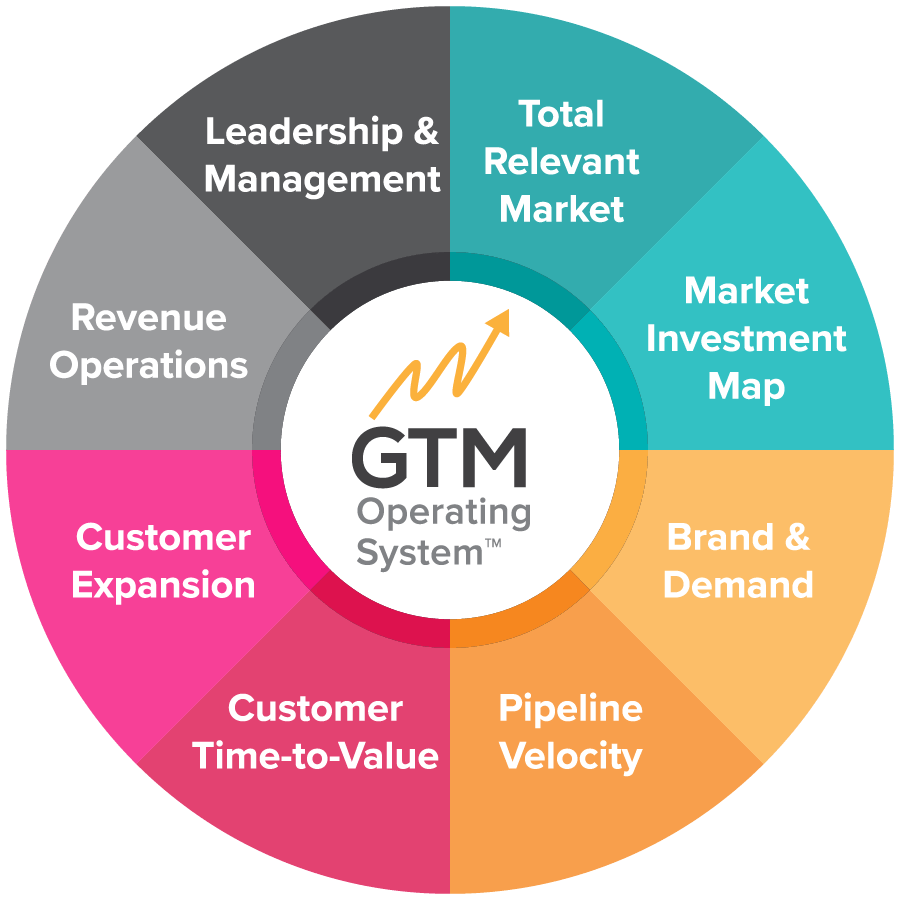
Execute the GTM Diagnostic & Assess the 15 GTM Problems
Conduct an empirical commercial diagnostic across the business to separate structural root causes from operational symptoms. Identify the exact bottlenecks in market focus, demand generation, pipeline velocity, or customer retention before prescribing leadership changes or technology overhauls.
What are the 2 or 3 critical commercial bottlenecks that must be resolved to unlock our value-creation thesis?
Audit Gross Revenue Retention (GRR) & Customer Time-to-Value
Evaluate the health of the installed base through a forensic Gross Revenue Retention audit. Identify at-risk customer cohorts, eliminate onboarding friction, and align Customer Time-to-Value to protect core recurring revenue before pursuing aggressive upsell.
Which legacy customer cohorts are at risk, and what must occur to secure GRR above 90%?
Develop a Market Investment Map for Core & Add-Ons
Deploy the Market Investment Map to evaluate market opportunities across existing core capabilities and prospective M&A add-ons. Align commercial investment toward high-margin segments and eliminate unprofitable custom product lines.
Which core customer segments and add-on products yield the highest margin-adjusted return on investment?
Implement a 90-Day Value Creation Operating Rhythm
Institutionalize a disciplined 90-day operating cadence connecting PE sponsors, operating partners, and management teams. Establish clear accountability for the top 3-4 commercial value-creation priorities with monthly milestone reviews that expose performance risk early.
How do we ensure operating partners and executive teams maintain disciplined weekly execution against the 90-day plan?
What Changes When Portfolio Value Creation Is Systematic
Accelerated Value-Creation Timeline
Eliminate months of trial-and-error by identifying and addressing the root commercial constraints immediately post-acquisition, accelerating EBITDA and top-line results.
Protected Gross Margins & Higher GRR
Stop silent revenue erosion and stabilize the installed base, driving Gross Revenue Retention (GRR) consistently above 90% through systematic Customer Time-to-Value.
Unified Sponsor-Management Alignment
Establish a common operating language between operating partners, deal leads, and portfolio executive teams, turning board meetings into productive strategic working sessions.
Single-Source Commercial Governance
Provide the board and executive leadership with standardized, real-time visibility into pipeline velocity, customer health, and CAC payback across all business lines.
Compounding Exit Valuation Multiples
Transforming an erratic sales organization into a predictable, capital-efficient revenue engine commands top-decile valuation multiples upon recapitalization or exit.
Core Private Equity Value-Creation Capabilities
Commercial Value Creation & Due Diligence
How private equity operating partners and portfolio executives use GTM OS to diagnose constraints and accelerate hold-period returns.
"One of the big realizations for us was that we had set the bar too low on qualification. We were generating volume, but not necessarily value. Once we stepped back and mapped our solutions against the right segments, it became obvious that fewer, higher-quality opportunities were far more valuable than just pushing more leads through the system."
"We already knew diversification and growth were important, but this work helped us formalize the process. Now the entire leadership team is aligned on the end goal and how we actually measure whether we're getting there."
"GTM OS forced us to get brutally clear about the health of the business. We realized our problem wasn't just pipeline — it was retention. Logos were coming in and logos were going out. When you see that clearly, you stop pretending growth will fix itself."
Accelerate Value Creation Across Your Portfolio
A Certified GTM OS Partner can help your deal team and operating partners diagnose commercial risk, stabilize Gross Revenue Retention, and establish a 90-day operating rhythm that compounds exit valuation.